
Berat Travel Guide
Riverfront quarters, a living castle and centuries of religious art make Berat one of Albania’s strongest cultural stops.
Stay overnight to experience more than the principal monuments, and choose your base carefully: the historic slopes offer atmosphere, while the modern centre makes arrivals and everyday access easier.
- Stay length
- 2–3 nights
- Getting in
- Bus or furgon
- Best for
- Historic-quarter exploration
Why use Berat as a base?
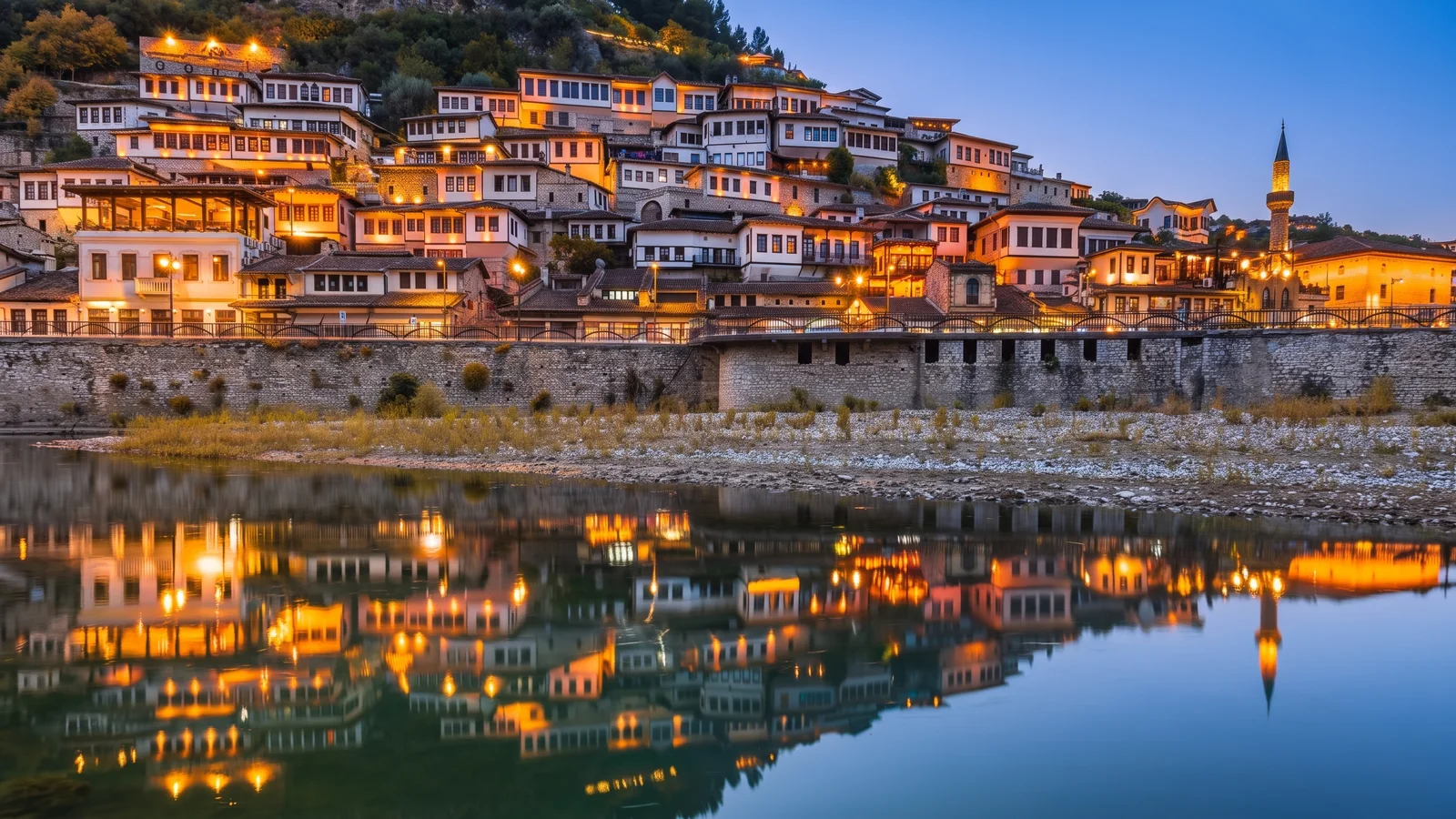
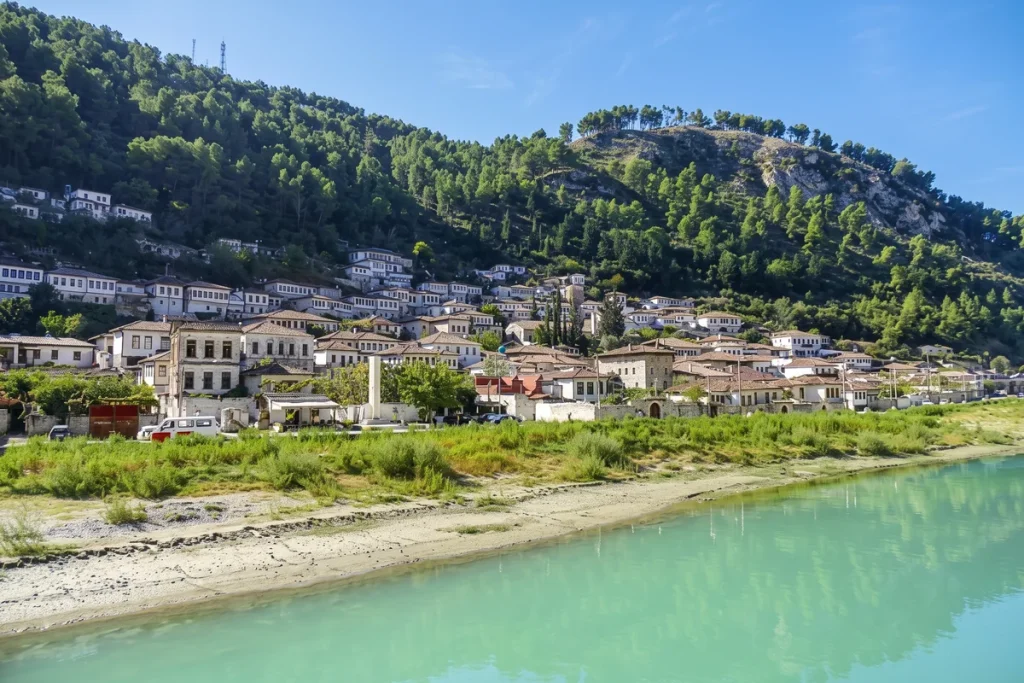
Berat’s appeal lies in the relationship between Mangalem, Gorica and the inhabited Castle District, arranged across the Osum River.
Together they form part of the UNESCO-listed historic centre, where Ottoman-era houses, mosques, churches and Orthodox iconography reveal the city’s layered religious and architectural history.
Read the full overview
Berat works best as an overnight cultural base rather than a checklist stop. Its monuments are compact enough to connect on foot, while an additional day creates room for the wider Osum landscape, Mount Tomorr or nearby wine country.
The main trade-off is between atmosphere on the historic slopes and easier access in the flatter modern centre.
Getting to Berat
Berat is straightforward to include on Albania’s main cultural route, but the final transfer to the old quarters requires more planning than the intercity journey itself.
Before you travelTravel realities and local limitations1 note
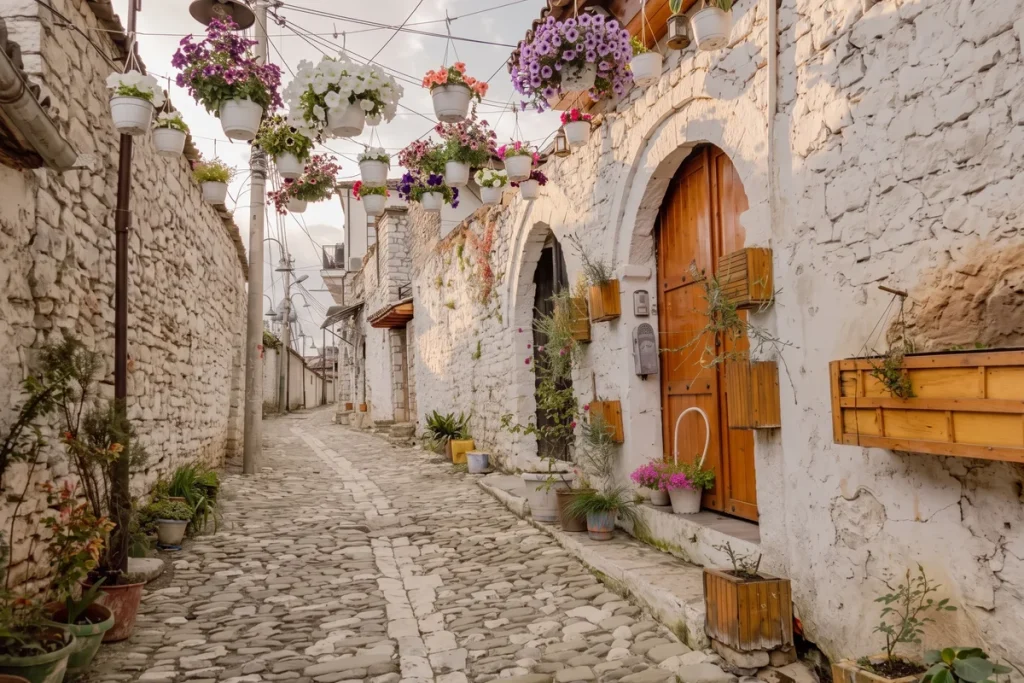
Berat looks compact on a map, but its historic character comes from terrain that can slow a visit considerably. Mangalem climbs beneath the castle, Kalaja contains uneven lanes, and the main castle approach is exposed to the sun. Distances are short, yet repeated gradients can make a tightly scheduled day tiring. Build in pauses and avoid judging the effort by distance alone.
Berat’s essential experiences
Begin with the inhabited citadel and its religious heritage, then explore how the old quarters face one another across the Osum. Use an additional day for one carefully chosen regional excursion.
- 01
Explore Berat Castle
Berat Castle, or Kalaja, is a fortified neighbourhood rather than a single self-contained monument. Walk among homes, defensive walls, church remains and viewpoints, looking for the Church of the Holy Trinity and the ruins of the Red Mosque as part of the citadel’s layered history.
- 02
Visit the Onufri Museum
Housed in the Church of the Dormition of St Mary within the castle, the Onufri Iconographic Museum introduces the vivid work associated with the 16th-century Albanian master Onufri and later icon painters. Confirm current operations before planning around a specific visiting time.
- 03
Read the architecture of Mangalem
Mangalem’s white Ottoman-era houses rise in tiers beneath the castle, creating Berat’s best-known hillside view. Explore the lanes as a neighbourhood rather than only as a photograph, noting how houses, mosques and the riverfront fit into the steep terrain.
- 04
Cross Gorica Bridge
Cross the stone Gorica Bridge to the quieter Gorica quarter, then look back towards Mangalem and the castle. The opposite bank provides the clearest sense of how Berat’s historic districts developed around both sides of the Osum.
- 05
Choose one regional excursion
Osum Canyon offers dramatic river scenery, Mount Tomorr adds a mountain landscape with cultural significance, and Roshnik or nearby wineries provide a rural alternative. Apollonia Archaeological Park is another possible full outing. Treat each as a separate trip and consider weather and seasonal conditions when choosing.
Is Berat your kind of base?
Best suited to
- Cultural travellers — The inhabited castle, Ottoman quarters, religious buildings and icon collection support a focused heritage stay rather than a single photo stop.
- Independent travellers — The principal districts can be linked without a guided tour, leaving room to explore the citadel and riverbanks at an unhurried pace.
- Solo visitors — The compact concentration of central sights makes Berat manageable as an independent stop on a wider Albania itinerary.
- Quiet-break travellers — Evenings and an overnight stay suit visitors who prefer historic surroundings and riverside walks to a major entertainment scene.
May not suit
- Travellers needing step-free access — Much of the defining heritage experience involves uneven cobbles, gradients and steps, particularly around the castle.
- Nightlife-focused visitors — Berat’s main draw is cultural exploration, not the scale or variety of nightlife found in a larger city or resort.
- Visitors wanting effortless outings — The main regional attractions are dispersed, and canyon, mountain and rural trips require more coordination than sightseeing in town.
Families interested in castles and history may enjoy Berat, provided children and accompanying adults are comfortable with the uneven uphill walking.
Choose your base before your hotel
Choose by setting and the amount of uphill walking you want at the beginning and end of each day. Mangalem, Gorica and Kalaja place you inside the heritage landscape; the modern centre prioritises convenience.
Mangalem
Choose Mangalem for Ottoman-era surroundings and immediate access to the old town and riverfront. It suits travellers who want atmosphere outside sightseeing hours, but many properties sit along sloping lanes.
Gorica
Gorica offers a quieter historic setting and views across the river towards Mangalem. It suits a calmer stay, with the trade-off that several principal sights are on the opposite bank or uphill in the castle.
Kalaja
Staying inside the Castle District provides the strongest sense of Berat as a living citadel. It is best for travellers comfortable with a steep approach and a smaller choice of nearby everyday services.
Modern centre
The modern centre is the practical choice for flatter surroundings, restaurants and routine errands. It works well for travellers who value convenience over historic ambience, while keeping the old quarters within walking distance.
More places worth exploring
Explore related places around Berat.
- AttractionOnufri Iconographic MuseumTicketed icon museum.
- AttractionMount TomorrFull-day mountain excursion.
Before you go
The essentials for planning a stay in Berat.
- Best months
- April–June, September–OctoberThese months generally suit outdoor exploration better than peak summer.
- Time needed
- 1–2 full daysAllow one day for the historic core and another for a regional excursion.
- Terrain
- Steep cobbles and stepsSupportive footwear is useful in the castle and old quarters.
- Summer
- Hot in July and AugustPlan exposed uphill sightseeing for a cooler part of the day.
- Winter
- Quiet cultural seasonConfirm museum operations if a particular indoor sight is essential to your visit.
Practical Berat questions
Practical answers to help you plan your visit.
What does Kalaja mean?
Kalaja is the Albanian word for castle or fortress. In Berat it commonly refers to the inhabited citadel district as well as the fortifications, so an address in Kalaja may be inside the elevated neighbourhood rather than beside one monument.
Why is Berat UNESCO-listed?
Berat forms a joint UNESCO World Heritage property with Gjirokastër. Its significance includes the well-preserved Ottoman-era urban landscape and the coexistence of different religious and cultural traditions.
Are Mangalem and Gorica separate places?
They are historic quarters of Berat on opposite sides of the Osum River. Mangalem rises below the castle, while Gorica occupies the facing bank; Gorica Bridge links the two sides.
Is the castle only a viewpoint?
No. The panoramas are part of the appeal, but Kalaja is also an inhabited district containing fortifications, homes, churches, ruins and the Onufri Museum. It deserves time as a neighbourhood rather than a brief photo stop.
Which excursion should I choose?
Choose Osum Canyon for river scenery, Mount Tomorr for a mountain-focused outing, Apollonia for archaeology, or Roshnik and the surrounding wine country for a rural day. Conditions and transport requirements differ, so avoid combining several into one rushed circuit.