
Palasë Beach Travel Guide
A long pebble shore beneath the Ceraunian Mountains.
Consider Palasë for its dramatic setting and generous space, but expect a relatively undeveloped beach where access, facilities and sea conditions require some flexibility.
- Access
- Car or SH8 junction bus
- Best for
- Scenic coastal stops
- Visit length
- Half day to full beach day
Why visit Palasë Beach?
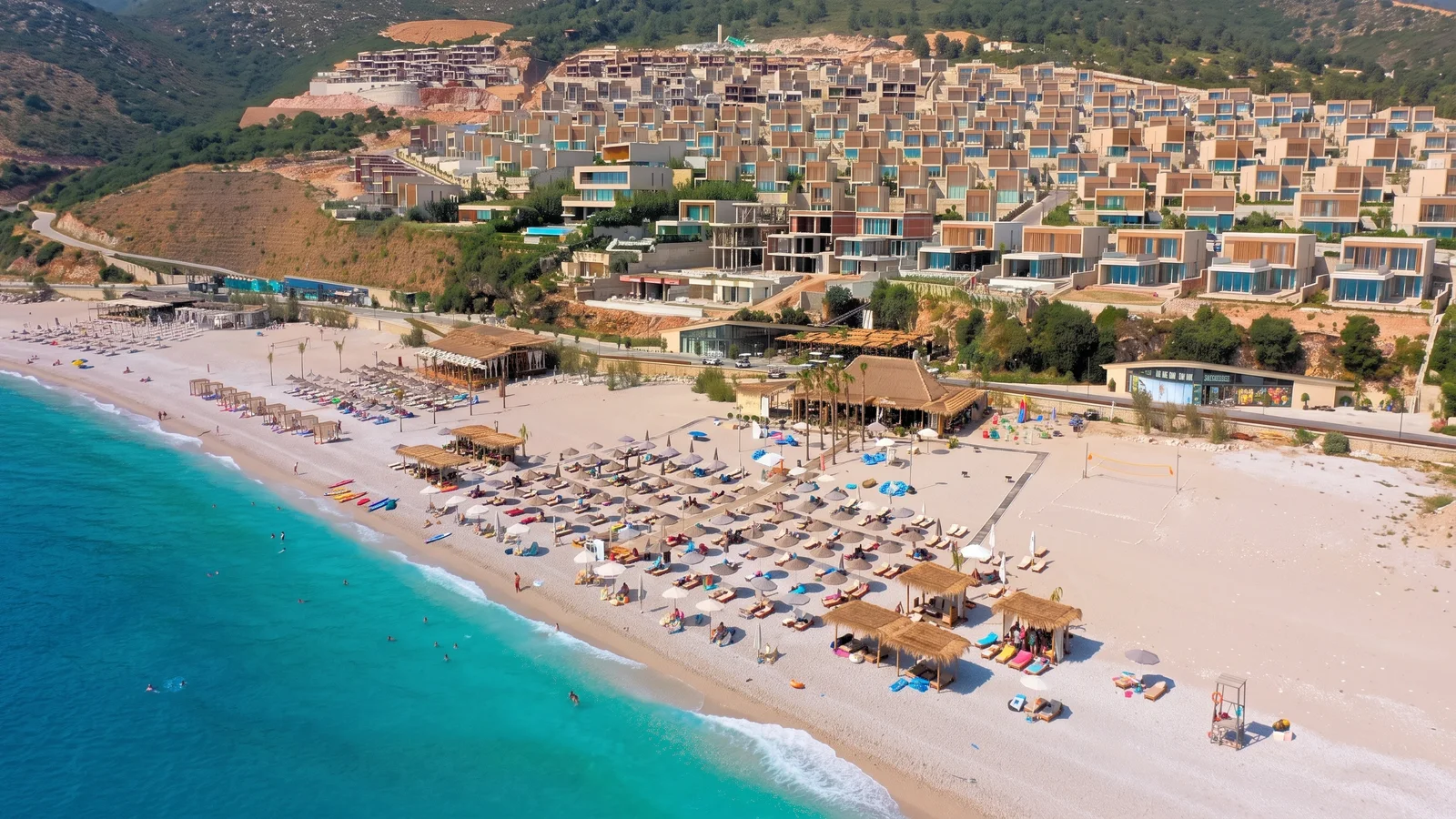
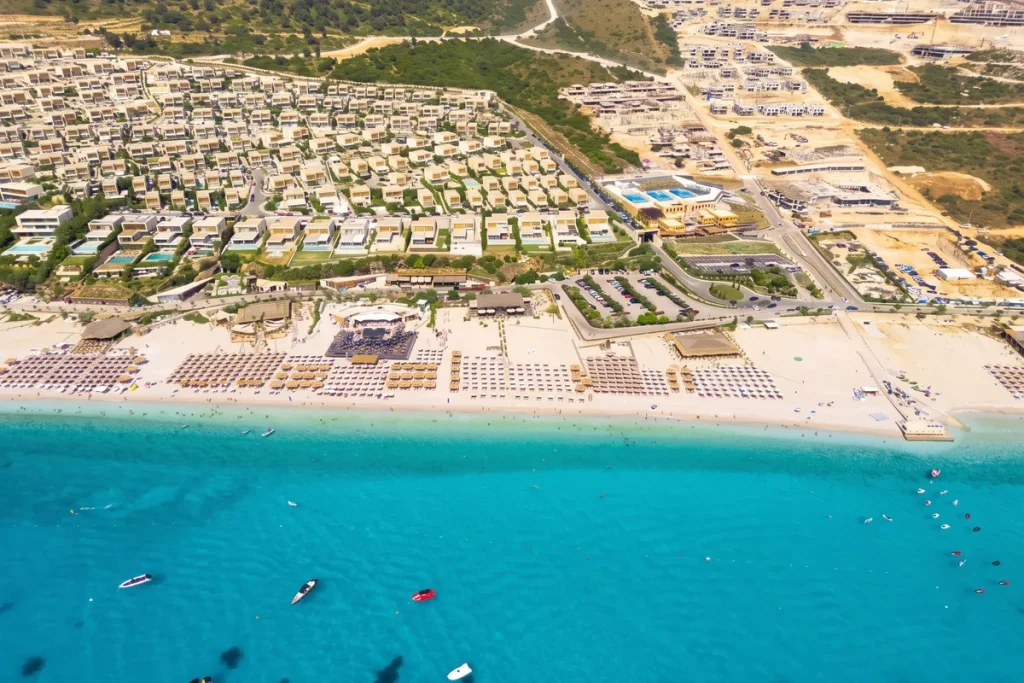
Palasë marks the northern entrance to Albania’s Ionian Riviera, with a long pale-pebble shore set beneath the Ceraunian Mountains. Its scale and mountain backdrop are the main rewards, especially for travellers making a coastal stop near Llogara Pass.
The beach has a looser, less uniformly developed character than the Riviera’s busier resort shores. Managed pockets provide some comfort in summer, while substantial open stretches retain a simpler feel.
See Access OptionsGetting to Palasë Beach
Palasë lies below SH8 near Llogara Pass. Reaching the shoreline is easiest by car or taxi; arriving by public transport leaves a long descent on foot.
Where is Palasë Beach?
A single location pin to help you orient yourself before planning the journey.
Palasë Beach
Northern Riviera, Albania
Shows the beach location only. Walking paths and boat access are not mapped here.
Open in Google MapsA day on Palasë’s shore
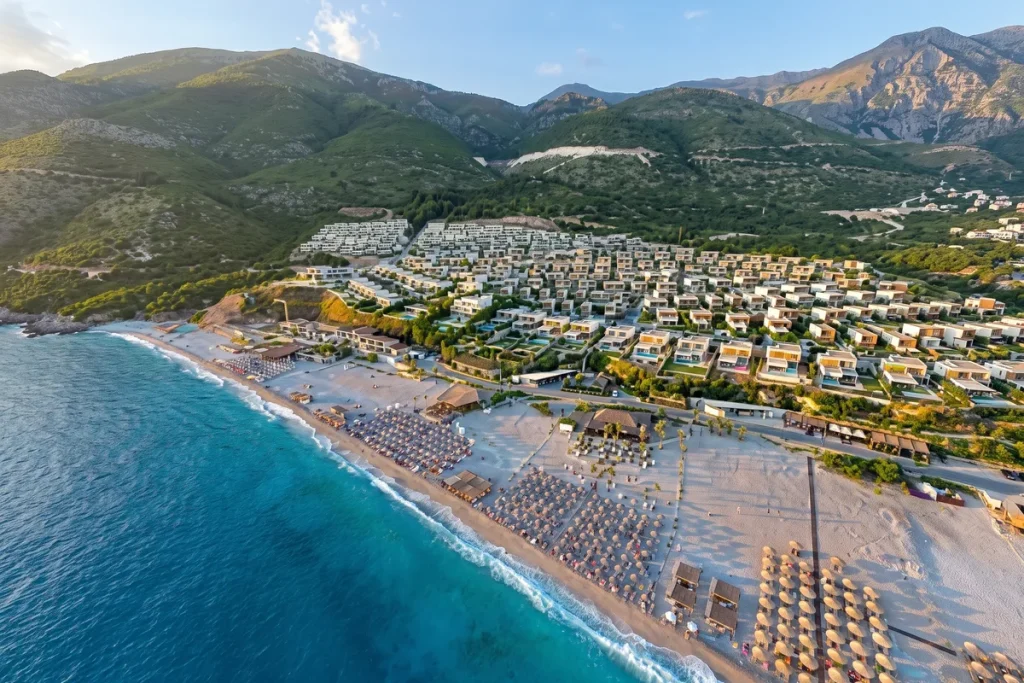
Expect a broad pebble beach where the Ceraunian Mountains rise sharply behind the Ionian coast.
Palasë feels defined by scale: a broad run of pale pebbles, open Ionian views and the Ceraunian Mountains immediately behind. Walking the shore is as much a part of the visit as swimming, particularly when changing sea conditions make the water less inviting.
The atmosphere varies by section and season. Summer activity gathers around managed pockets, while other parts of the beach remain comparatively sparse and better suited to visitors who bring what they need.
- Walk beneath the mountains. Follow the pale shoreline for changing views of the mountain slopes, open sea and the beach’s mix of developed and quieter stretches.
- Swim in calm conditions. The pebble entry leads directly into the Ionian Sea. Check the water before entering, as the shore is exposed and waves can strengthen later in the day.
- Find your preferred atmosphere. Settle near a seasonal managed area for more convenience, or continue along the open shore for a simpler beach experience away from the main clusters.
Know before you go
- SurfacePale pebblesThe shore and water entry are pebbly rather than sandy.
- SunbedsSeasonal in limited areasManaged sections may provide loungers, while open stretches remain basic.
- Toilets and showersManaged sections onlyDo not expect these facilities along the full beach.
- Food and drinkBring your own suppliesDining at the beach is not dependable across the shoreline.
Bring with you
- Water shoes
- Drinking water
- Food supplies
- Sun protection
- Cash
Is Palasë Beach right for you?
Best suited to
- Riviera road trippers — Palasë makes a scenic coastal stop for travellers driving between Llogara Pass and Dhërmi.
- Pebble-beach walkers — The long shoreline provides room to explore beyond the main managed pockets.
- Independent beachgoers — Visitors equipped with their own food, water and shade can use the more basic stretches comfortably.
May not suit
- Sand seekers — The shore and water entry are pebbly, with no confirmed sandy section.
- Visitors with limited mobility — The steep approach and loose pebble surface may be difficult, and no adapted beach access has been identified.
- Public-transport dependants — Stopping on SH8 still leaves a long downhill walk followed by a demanding uphill return.
- Service-focused visitors — Facilities are seasonal and confined mainly to managed sections rather than spread across the beach.
Families may prefer a managed section and should assess the sea before swimming, as the pebble entry and changing waves can be challenging for children.
More places worth exploring
Discover more beaches and interesting places along the Northern Riviera.
- BeachPulëbardha BeachSmall seasonal cove between Sarandë and Ksamil.
Before you go
The essentials for planning your visit to Palasë Beach.
- Best time of day
- MorningSwimming conditions are often calmer before waves build later.
- Peak months
- July and AugustParking and managed sections face the greatest pressure.
- Car need
- RecommendedPublic transport stops on SH8, several kilometres above the beach.
- Beach setup
- Mixed managed and open areasSeasonal services vary between sections.
- Time needed
- Half day to full dayAllow longer if you plan to settle on the shore rather than make a scenic stop.
Worth knowingCrowds, timing and practical limits1 note
Palasë’s long shoreline can look empty and uncomplicated from above, but the experience differs sharply by section and season. Summer services cluster in limited managed areas, while undeveloped stretches have no lifeguards and few conveniences. Even when the beach itself feels spacious, July and August can put pressure on the most accessible parts.
Planning your Palasë beach day
Practical answers to help you plan your visit.
Can I combine Palasë with Llogara Pass?
Yes. Palasë lies below SH8 near the southern side of the pass, so the beach works naturally as part of a drive between Llogara and Dhërmi. Keep enough time for the steep descent and return to the main road.
Is Palasë a good base for the Riviera?
It is better treated as a beach stop than as the most practical all-purpose base. Dhërmi offers closer access to other Riviera beaches, while Himarë provides a broader range of services for a longer stay.
Can I visit outside summer?
The shoreline remains the attraction, but most information about managed facilities and sunbeds relates to summer. Outside the main season, plan for a largely self-sufficient visit and check weather and road conditions locally.
Can I depend on finding free beach space?
Large open sections are commonly reported, but the summer arrangement can change around managed areas. Bringing your own beach setup gives you more flexibility about where to settle.
What should I do if the sea is unsettled?
Stay out of the water if waves or the pebble entry feel difficult, and keep away from rocky cliff bases. Walking the open shoreline and enjoying the mountain views remain worthwhile alternatives.