
Rozafa Castle Travel Guide
Explore a layered hilltop fortress above Shkodër, where ruined churches, defensive walls and open ramparts overlook the surrounding rivers and Lake Shkodër.
- Visit type
- Hilltop castle and museum
- Practical base
- Shkodër
- Best for
- History and archaeology
Why explore Rozafa Castle?
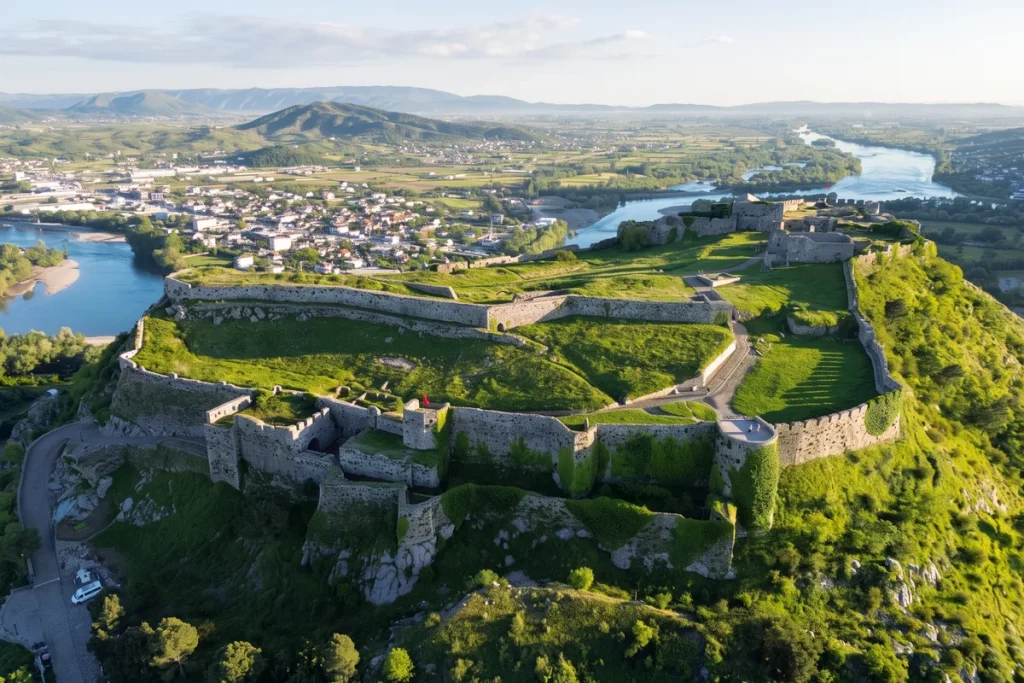
Rozafa Castle occupies a commanding hill above the meeting of the Buna and Drin rivers, with views towards Lake Shkodër. The site has ancient origins, while its surviving walls and buildings reflect successive Illyrian, Roman, Venetian and Ottoman chapters in the region’s history.
The fortress matters both as an archaeological complex and as a key to understanding Shkodër’s strategic position.
Read the full overview
Its gateways, religious ruins and defensive works reveal repeated adaptation rather than a single period of construction, making it especially rewarding for travellers interested in archaeology and military architecture.
Know before you go
Confirm current opening hours, admission prices and museum arrangements before travelling because these operational details can change.
- Admission
- Ticket requiredTickets are reported as available at the gate; confirm current prices and categories.
- Opening hours
- Check current hoursReported seasonal closing times are inconsistent.
- Main visit
- About 60–90 minutesSuitable for the principal ruins and viewpoints at a steady pace.
- Slower visit
- About 1.5–3 hoursAllow longer for the museum, ramparts and extended viewpoint stops.
- Terrain
- Steep and unevenThe final approach is cobbled, while upper routes cross irregular stone.
- Advance booking
- Confirm before visitingTickets are generally reported at the gate, but current arrangements should be checked.
Getting to Rozafa Castle
Rozafa Castle is about 3 km south of central Shkodër. Walking, taxi, bicycle, local bus and car are all possible, although the final approach is uphill.
What to see inside Rozafa
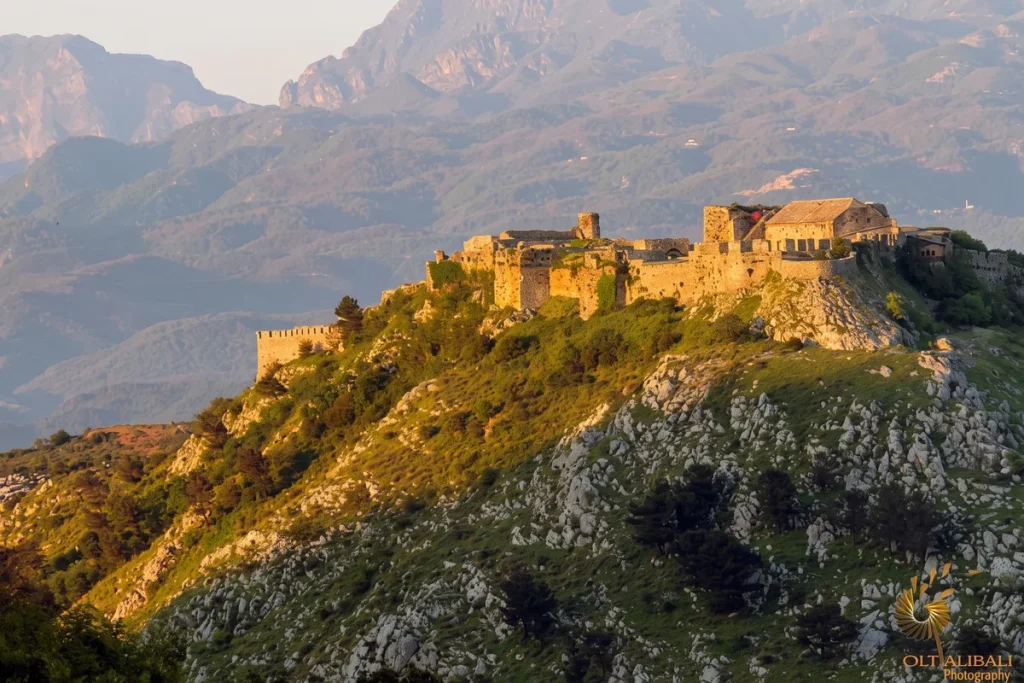
The main reward comes from reading the fortress as a layered complex rather than expecting a fully preserved castle interior.
The visit unfolds through fortified gateways, courtyards and broken defensive walls, with the landscape repeatedly visible between the ruins. The site’s long occupation matters more than architectural completeness: different sections preserve traces of several periods rather than one unified castle.
The church-mosque, museum and upper fortifications provide the clearest historical context. The viewpoints then place those remains in their landscape, showing why this hill was chosen to control waterways and approaches to Shkodër.
Plan your time on site
What to see
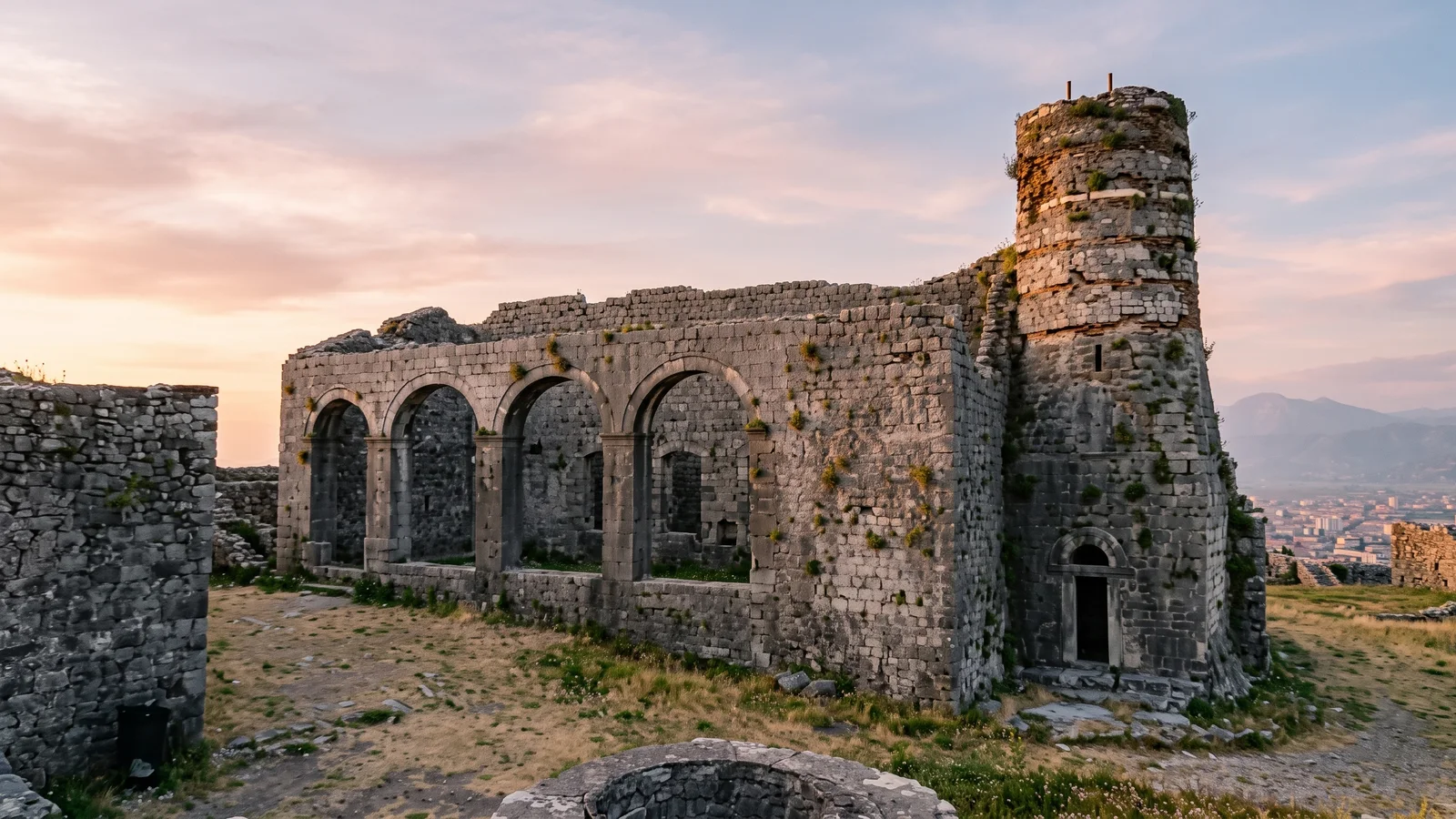
- Church-Mosque of St StephenThe ruined medieval church was converted into a mosque during the Ottoman period. Its surviving structure makes the castle’s changing religious and political history unusually visible.
- Rozafa Castle MuseumHoused within the complex, the museum provides archaeological and historical context for the hill and its successive occupants.
- Venetian fortificationsWalls, gateways and defensive structures from the Venetian period show how Rozafa guarded the approaches to Shkodër before the Ottoman conquest.
- Upper citadelThe highest fortified area contains fragmented walls, open courtyards and broad viewpoints. It gives the clearest sense of the castle’s scale and commanding position.
- River and lake viewpointsOpen sections of the ramparts reveal the Buna and Drin river landscape, Shkodër and Lake Shkodër, explaining the hill’s strategic importance.
- The legend of RozafaThe castle is closely associated with the legend of Rozafa, a woman immured within its walls so the fortress would stand. The story remains one of the best-known legends in Albanian folklore.
Plan ahead
- Rozafa is a substantial ruined fortress, not a restored castle with level visitor routes or complete interiors. Its fragmented remains require some imagination, and the upper areas involve steep, irregular stone surfaces. Limited shade can make the hill uncomfortable in hot weather, while rain increases the risk of slippery cobbles.
- Footwear Shoes with reliable grip — The steep cobbles and irregular stone paths can be slippery after rain.
- Water Bring your own supply — Do not depend on finding a reliable on-site water source.
- Sun protection Bring hat and sunscreen — Much of the upper complex has limited shade.
- Museum On-site — Confirm current opening and ticket arrangements before visiting.
Is Rozafa Castle right for you?
Best suited to
- History-focused travellers — The layered Illyrian, Roman, Venetian and Ottoman story gives the ruins more depth than a viewpoint-only stop.
- Landscape photographers — Ramparts overlook Shkodër, the surrounding river landscape and Lake Shkodër.
- Short-stay visitors — The castle fits comfortably into a focused Shkodër sightseeing day.
- Independent no-car travellers — Walking, taxi and local bus access make a rental car unnecessary.
May not suit
- Visitors needing step-free access — The steep approach and irregular upper paths can make much of the citadel difficult for people with significant mobility limitations.
- Heat-sensitive visitors — Limited shade and exposed stone areas can make hot-weather visits disproportionately tiring.
- Visitors unprepared for rain — Polished cobbles may become slippery after wet weather, particularly on sloping sections.
Families can visit, but children need close supervision on uneven paths and around exposed areas where railings may be limited. Pushchairs are likely to be awkward on the steep cobbles and upper paths.
Before you go
Practical details to check before visiting Rozafa Castle.
- Best time
- Early morning or late afternoonThese periods are generally cooler and may avoid peak visitor pressure.
- Season
- Visits possible year-roundOpening hours vary by season and should be checked before visiting.
- Setting
- Exposed hilltop ruinsConditions are most comfortable outside the hottest part of the day.
- Museum
- Inside the castle complexConfirm current access arrangements before visiting.
Rozafa Castle visitor questions
Practical answers to help you plan your visit.
Why is it called Rozafa Castle?
The name is linked to the legend of Rozafa, who was immured within the walls as a sacrifice intended to keep the fortress standing. Versions of the story vary, but it remains central to the castle’s cultural identity.
Is the castle mainly Venetian?
No. Venetian fortifications are prominent, but the hill has a much longer history associated with ancient, Roman and later Ottoman occupation. The surviving complex is best understood as a site reshaped over many centuries.
Is the church still used for worship?
The Church-Mosque of St Stephen is a historic ruin rather than a conventional working place of worship. Its importance lies in the visible transition from medieval church to mosque.
Can Rozafa Castle be combined with central Shkodër?
Yes. Its location south of the centre makes it a natural addition to a Shkodër sightseeing day, leaving time for the city’s museums, pedestrian centre or historic neighbourhoods.
Will I understand the ruins without a guide?
The major structures and viewpoints can be appreciated independently, especially if the museum is accessible. Travellers seeking detailed archaeological or military history may gain more from additional interpretation.