
Krujë Castle Travel Guide
Skanderbeg’s stronghold above Krujë’s cobbled bazaar.
Come for Albanian history, two contrasting museums, surviving monuments and broad views over the surrounding landscape.
- Best for
- History and heritage visits
- Visit style
- Half-day cultural stop
- Nearby highlight
- Krujë Old Bazaar
Why explore Krujë Castle?
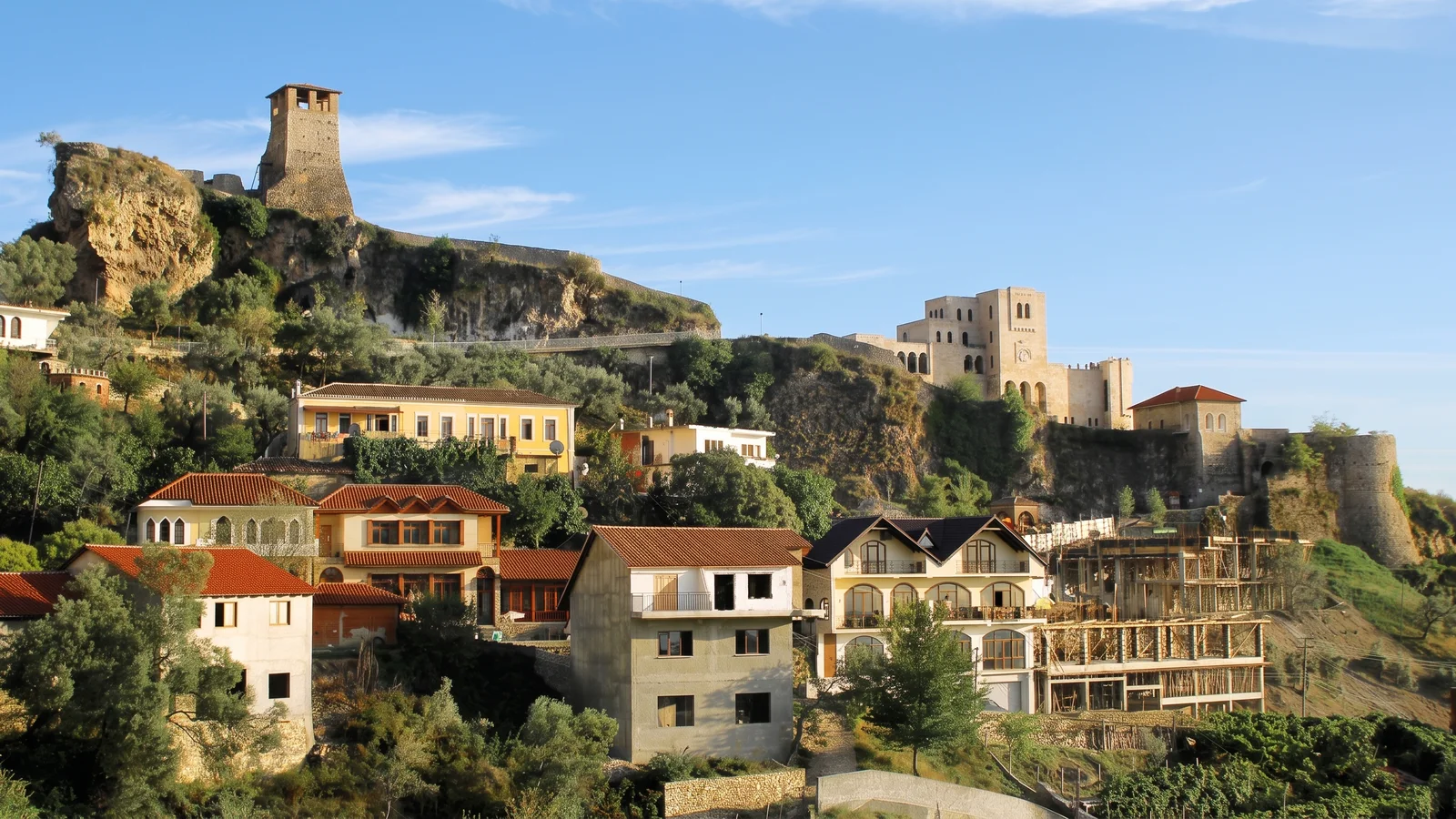
Krujë Castle is closely associated with Gjergj Kastrioti Skanderbeg, whose fifteenth-century resistance to Ottoman forces made the hilltop fortress central to Albania’s national story. Surviving walls and historic structures give that history a tangible setting.
The site most rewards travellers interested in Albanian identity and the layers of history that followed Skanderbeg’s era.
Read the full overview
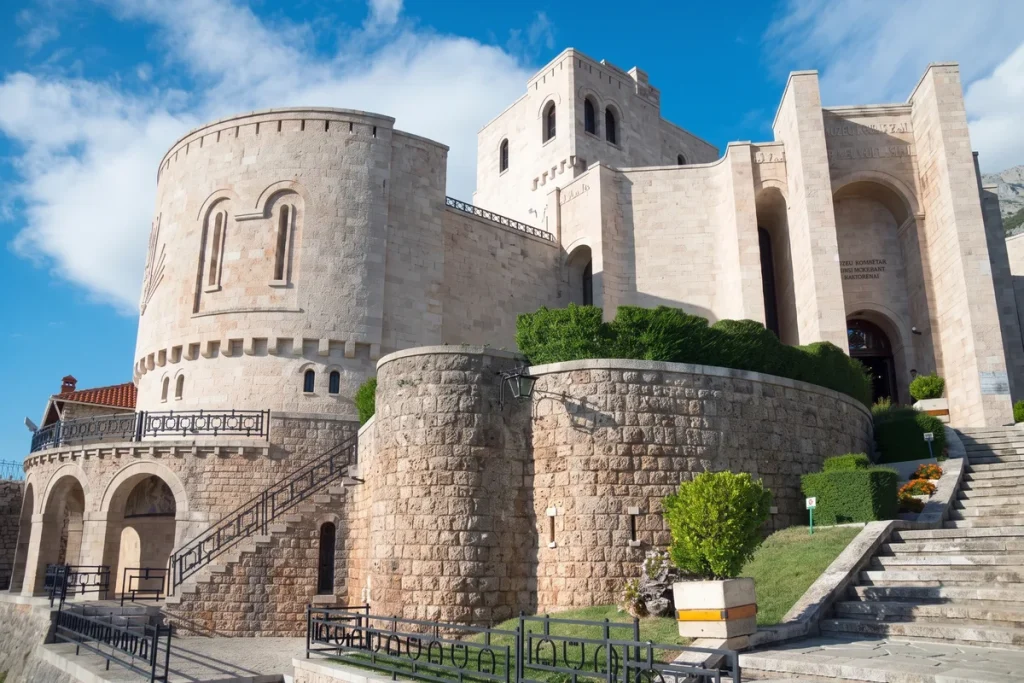
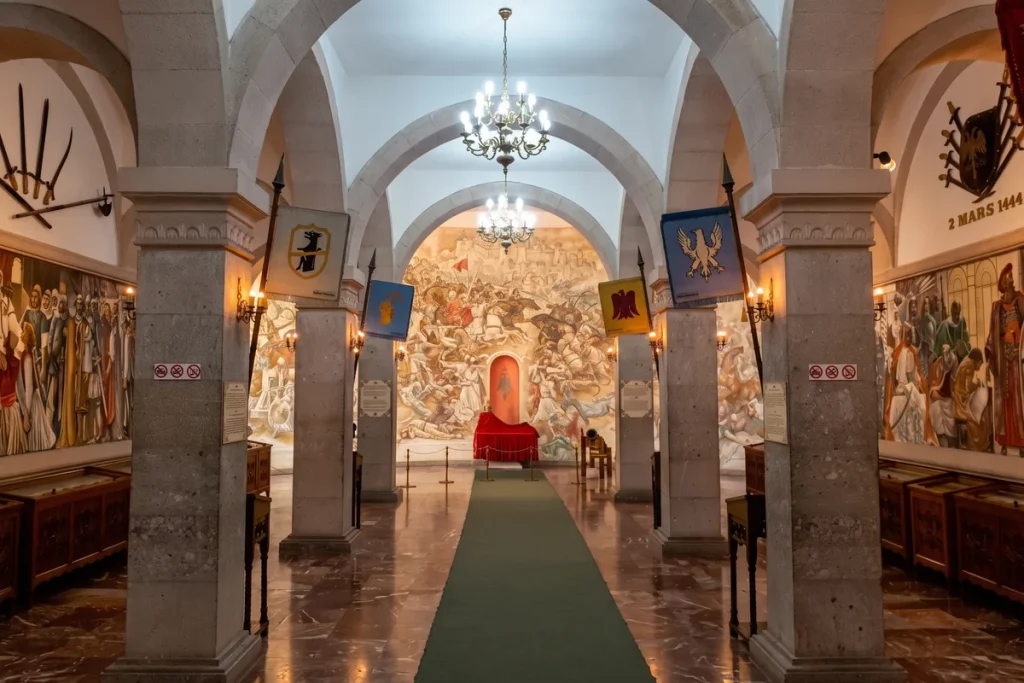
The Skanderbeg Museum explains the national narrative, while the Ethnographic Museum, Dollma Tekke and Ottoman remains reveal domestic, religious and civic life within the fortified settlement.
Know before you go
Museum operating details are changeable, so confirm hours and ticket arrangements shortly before visiting if either museum is central to your plans.
- Castle grounds
- Check access locallyThe grounds and museums may follow different access and ticket arrangements.
- Museum admission
- Separate tickets reportedCurrent prices and purchasing methods should be confirmed locally; carry Albanian lek.
- Museum hours
- Check current hoursPublished schedules conflict and may vary seasonally.
- Time needed
- Roughly 2–3 hoursAllow about half a day when adding the Old Bazaar and lunch.
- Crowds
- Morning is usually quieterThe bazaar and upper roads can become busier later in the morning and at peak periods.
- Booking
- Confirm if museums matterNo consistent advance-booking arrangement can be assumed.
Getting to Krujë Castle
Road transport reaches Krujë, but most arrivals still involve a final uphill approach toward the bazaar and castle.
What to see inside Krujë Castle
Begin with the fortress setting, then use the museums and surviving religious and civic structures to understand how Krujë’s military history developed into a symbol of Albanian identity.
Walk the grounds before entering the museums to understand the defensive position and the relationship between the surviving buildings. The Skanderbeg Museum supplies the national and military context; the Ethnographic Museum offers a more intimate view of traditional household life.
Continue downhill into the Old Bazaar after the castle. Its timber-fronted shops and cobbled lane form the historic commercial approach to the fortress, but the bazaar remains a distinct part of Krujë rather than an exhibit inside the castle.
Plan your time on site
What to see
- Skanderbeg MuseumA purpose-built museum within the castle complex devoted to Skanderbeg and the fifteenth-century resistance against Ottoman expansion. Its collections and displays provide the clearest historical framework for the site.
- Ethnographic MuseumHoused in the historic Toptani family residence, this museum presents domestic interiors, crafts and household life, adding social history to the castle’s military narrative.
- Dollma TekkeAn eighteenth-century Bektashi place of worship within the castle grounds. Its painted decoration and religious role reveal another layer of Krujë’s cultural history.
- Castle Clock TowerOne of the fortified complex’s most recognisable surviving structures. Together with the remaining walls, it helps visitors read the castle as a former settlement rather than a single monumental building.
- Fatih Mosque remainsThe remains of an Ottoman-period mosque reflect the changes that followed the era most closely associated with Skanderbeg and broaden the site beyond its best-known chapter.
- Castle viewpointsOpen viewpoints across Krujë and the surrounding landscape demonstrate the strategic value of the fortress’s commanding hilltop position.
Plan ahead
- Krujë Castle is best understood as a historic fortified settlement containing museums, religious remains, homes and viewpoints. Do not expect a complete medieval palace or a single continuous interior: much of the experience comes from moving between separate structures and reading the hilltop setting as a whole.
- Footwear Shoes with reliable grip — Historic cobbles and uneven surfaces require more care than the compact site suggests.
- Water Bring water in warm weather — Exposed parts of the hilltop complex can feel hot in summer.
- Food Cafés and restaurants nearby — Eating options are concentrated around the castle and Old Bazaar.
- Shopping Bazaar and museum gifts — The Old Bazaar has souvenir and craft shops directly below the castle.
Is Krujë Castle right for you?
Best suited to
- Albanian history enthusiasts — The fortress, Skanderbeg Museum and surviving monuments place a major national story in its original hilltop setting.
- Tirana day trippers — The castle, museums and Old Bazaar combine naturally into a compact cultural excursion.
- Museum-focused travellers — Two distinct museums cover national history and traditional domestic life within the same heritage complex.
- Architecture and culture seekers — The clock tower, Dollma Tekke, mosque remains and bazaar reveal more than the castle’s military history alone.
May not suit
- Limited-mobility visitors — Steep gradients, uneven surfaces and historic cobbles can make independent access difficult without advance route and drop-off planning.
- Pushchair users — The uphill cobbled approach and changes in level can make moving between the bazaar, grounds and museums awkward.
- Intact-castle seekers — The appeal lies in the setting, museums and scattered historic structures rather than a complete medieval interior.
Families interested in history may enjoy the museums, but the approach and changes in level can be tiring for younger children.
Before you go
Practical details to check before visiting Krujë Castle.
- Best time
- Spring or autumn morningsConditions are generally more comfortable and crowds lighter.
- Season
- Year RoundSummer heat and congestion can make the visit less comfortable.
- On site
- Museums, cafés and shopsThe castle complex and adjoining bazaar provide places to eat and browse.
- Setting
- Hilltop heritage complexThe grounds contain museums, historic structures and viewpoints rather than one enclosed attraction.
Krujë Castle visitor questions
Practical answers to help you plan your visit.
Is Krujë Castle worth visiting without the museums?
Yes, if you value the hilltop setting, surviving structures, religious monuments and views. Without the museums, however, the story of Skanderbeg and the fortress is less fully explained.
Is the Skanderbeg Museum an original castle building?
No. It is a purpose-built museum within the historic castle complex, designed to interpret Skanderbeg’s life and Albania’s fifteenth-century resistance to Ottoman expansion.
Can I combine the castle with Sari Salltik?
Yes, both can fit into a Krujë-focused itinerary, but Sari Salltik is a separate hilltop destination rather than part of the castle complex. Plan its transport independently.
What is the difference between the two museums?
The Skanderbeg Museum focuses on national and military history. The Ethnographic Museum occupies a historic residence and concentrates on domestic interiors, crafts and traditional life.
Is the Old Bazaar inside the castle?
No. It lies directly below the fortress and forms the historic approach to it. The bazaar complements the visit with shops, crafts and places to eat, but it is a separate part of Krujë.