
Gjirokastër Castle Travel Guide
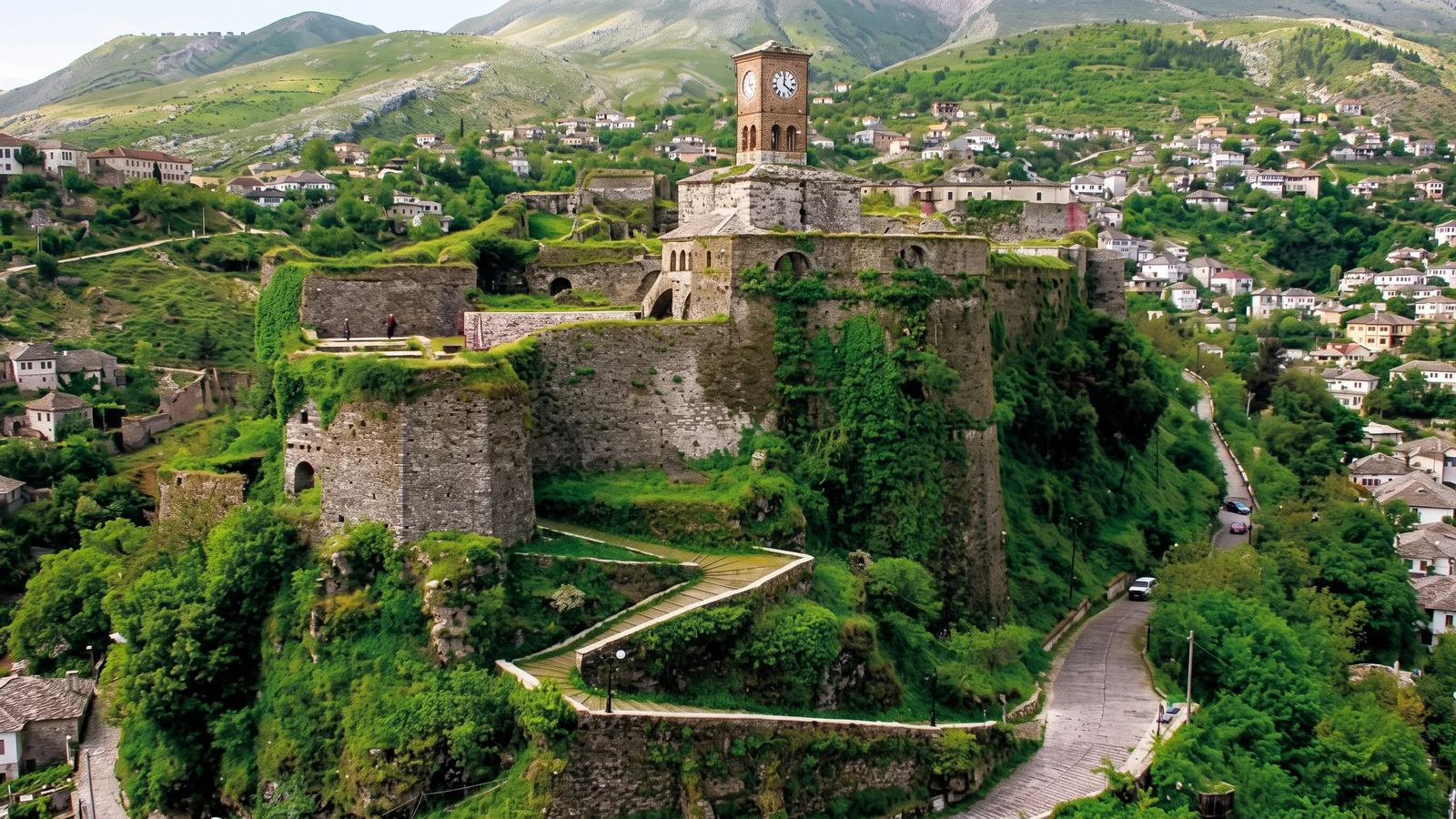
A vast stone citadel overlooking Gjirokastër’s historic centre and the Drino Valley, with ramparts, vaulted galleries, military collections and far-reaching views.
- Visit type
- Hilltop fortress and museum complex
- Best for
- History and heritage visits
- Setting
- Above Gjirokastër bazaar
Why explore Gjirokastër Castle?
Gjirokastër Castle dominates the ridge above the UNESCO-listed historic centre, with massive walls, long stone galleries and views across the slate-roofed city to the Drino Valley.
Major expansion under Ali Pasha of Tepelena in the early nineteenth century helped give the fortress its present scale.
Read the full overview
The castle is Gjirokastër’s principal heritage attraction, bringing together defensive architecture, later prison history and military collections. It particularly rewards travellers interested in Albania’s layered past, fortifications and photography.
Know before you go
Check the current admission arrangements and opening hours before setting out, particularly outside summer, because published information conflicts.
- Admission
- Check current pricePublished prices differ, and some museum areas may require an additional ticket.
- Opening hours
- Confirm before visitingPublished schedules differ, especially in winter and on Mondays.
- Time needed
- Allow about 2–3 hoursThis is a planning estimate for the principal galleries, museum areas and upper grounds.
- Booking
- Usually plan to pay on arrivalOnline ticketing has been reported, but advance booking requirements are unclear.
Getting to Gjirokastër Castle
The castle stands directly above Gjirokastër’s historic bazaar. A car is unnecessary for the attraction itself, but reaching the entrance involves a steep ascent unless you take a taxi.
Inside Gjirokastër’s hilltop fortress
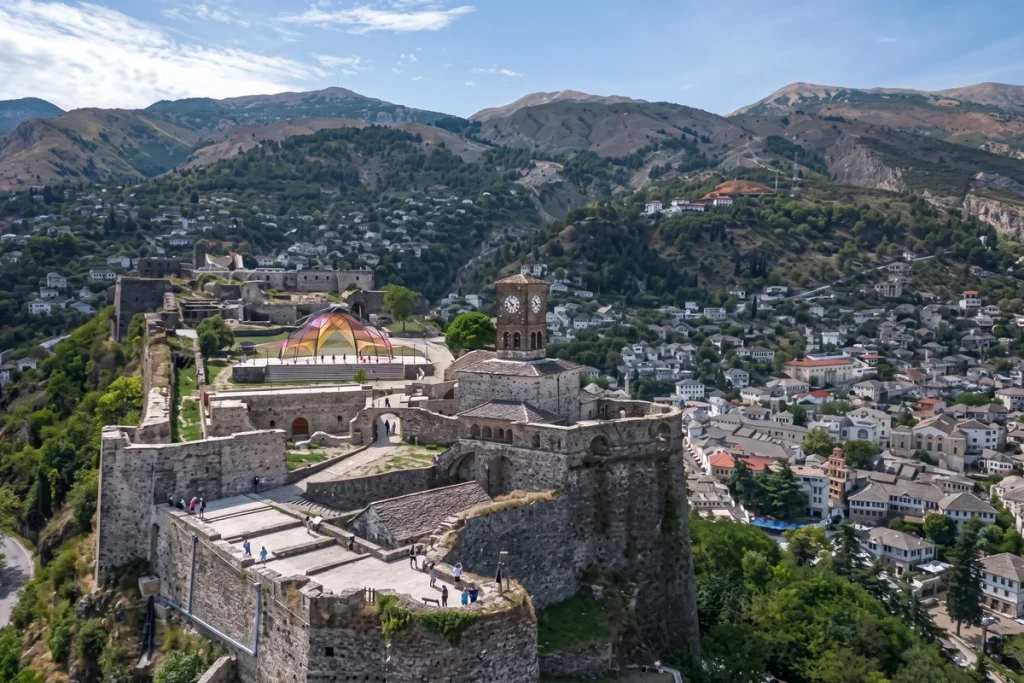
The visit unfolds through monumental stone architecture, military displays and open viewpoints rather than a single furnished interior.
The fortress visible today reflects several phases of construction and adaptation. Ottoman-era expansion, twentieth-century imprisonment and later museum use have left a complex in which monumental architecture and modern political history sit side by side.
A sensible sequence is to explore the vaulted galleries and museum displays before continuing to the upper grounds, Clock Tower and viewpoints. This gives the historical collections context before the visit opens onto the wider city and valley.
Plan your time on site
What to see
- Castle rampartsWalk the fortified upper areas to appreciate the citadel’s scale and look across Gjirokastër’s stone roofs, the surrounding mountains and the Drino Valley.
- National Museum of ArmamentsWeapons and related displays trace periods of Albanian military history, placing the fortress’s later uses within a broader national story.
- Artillery GalleryThis long vaulted stone gallery places artillery pieces inside one of the castle’s most atmospheric military spaces.
- Castle prisonThe prison areas reflect the fortress’s twentieth-century use as a place of detention, providing a sombre contrast to the open ramparts.
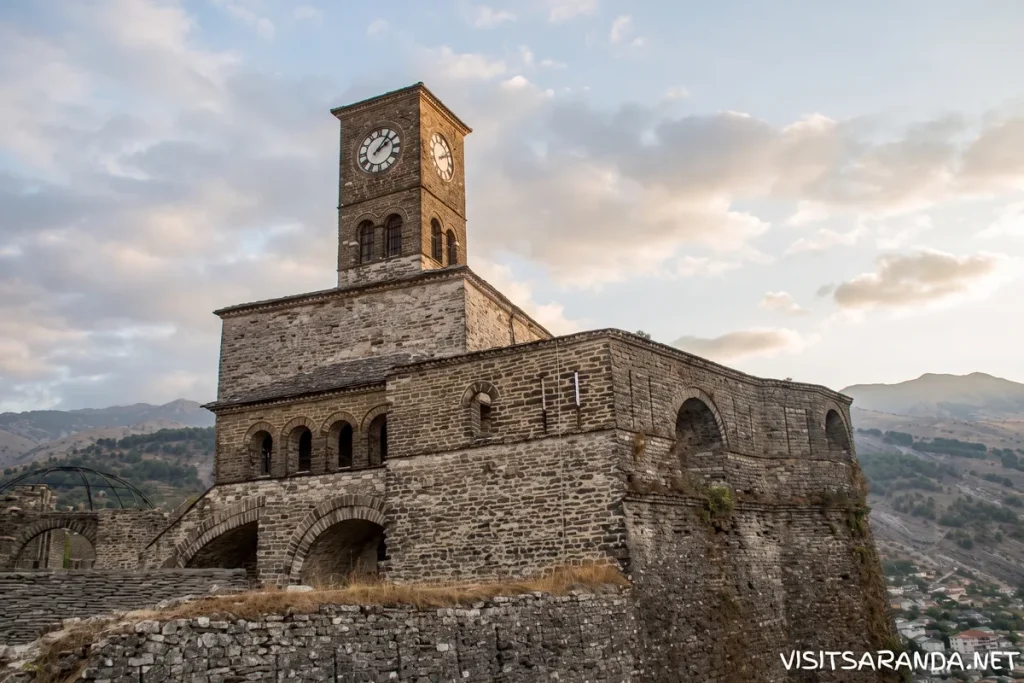
- Clock TowerThe Clock Tower is one of the upper complex’s most recognisable architectural features and a useful visual marker while exploring the extensive grounds.
- American aircraftA displayed United States military aircraft is an unusual feature of the collection. Competing accounts surround how it came to Albania, so treat definitive capture stories cautiously.
- Festival groundsThe castle has long served as a setting for Gjirokastër’s National Folklore Festival, connecting the military complex with Albania’s traditions of music, dance and costume.
Plan ahead
- The architecture is the main event, and interpretation may feel uneven across the extensive complex. Some areas are atmospheric stone spaces rather than fully developed exhibitions, while the aircraft’s popular backstory is disputed. Visitors expecting a compact museum with a single clear narrative may find the experience more fragmented, but the scale and setting compensate for those gaps.
- Footwear Wear sturdy shoes — Cobbles, stairs and uneven stone surfaces can become slippery when wet.
- Refreshments Limited choice reported — A small refreshment point may operate within the walls, but bring water rather than relying on it.
- Shade Limited on ramparts — Bring sun protection during warm weather.
- Payment Carry some lek — Card or QR payment may not always work at the ticket point.
Is Gjirokastër Castle right for you?
Best suited to
- Heritage travellers — The fortress, prison areas and collections cover several layers of Albanian history rather than offering scenery alone.
- Fortification enthusiasts — Long vaulted galleries, defensive walls and artillery displays reveal the scale and changing military uses of the citadel.
- Photographers — The upper areas frame Gjirokastër’s slate roofs against the Drino Valley and surrounding mountains.
- Independent city walkers — The castle forms a natural centrepiece for a day linking the historic bazaar with Gjirokastër’s upper neighbourhoods.
May not suit
- Limited-mobility visitors — Full exploration is difficult because the complex includes steep gradients, stairs and uneven stone surfaces, even if a taxi shortens the approach.
- Travellers needing step-free access — The historic fortress layout is not suited to visitors who require a consistently flat, step-free route.
- Very brief visits — The site’s scale and separate historical areas make it a poor choice if you only have time for a quick viewpoint stop.
Families may enjoy the open grounds and military exhibits, but children need close supervision around uneven surfaces and may find the prison areas sombre.
More places worth exploring
Explore related places around Gjirokastër Castle.
- AttractionSkenduli HouseOttoman-era museum-house visit.
Before you go
Practical details to check before visiting Gjirokastër Castle.
- Best time
- Spring or early autumnThese periods are generally more comfortable than peak summer.
- Summer visits
- Go early or lateThe exposed hilltop setting can be hot around midday.
- Weather
- Check conditionsWind and rain can make the open sections less comfortable.
Understanding the castle
Practical answers to help you plan your visit.
Why is Gjirokastër Castle historically important?
Its position controlled the ridge above Gjirokastër and the Drino Valley, while successive rulers enlarged and adapted it. The present complex reflects Ottoman expansion, twentieth-century imprisonment and later museum use.
Who gave the castle its present scale?
The site has older origins and multiple construction phases, but major early nineteenth-century expansion is associated with Ali Pasha of Tepelena.
What is the story behind the American aircraft?
The displayed United States military aircraft is often presented with a dramatic capture story, but accounts of how it reached Albania differ. It is best viewed as a Cold War-era curiosity rather than accepting one definitive version.
Is the castle part of the UNESCO experience?
The fortress rises above Gjirokastër’s UNESCO-listed historic centre and is central to understanding the city’s setting and history. Its viewpoints also reveal the old town’s distinctive stone roofs and steep urban layout.
Can I explore without a guide?
Yes. The main spaces can be visited independently, though a knowledgeable guide can help connect the fortress’s different construction phases, prison history and military displays.