
Blue Eye Travel Guide
See one of southern Albania’s most distinctive natural sights: a clear karst spring whose dark blue centre and turquoise margins resemble an eye, surrounded by woodland near Muzinë.
- Attraction type
- Protected karst spring
- Location
- Muzinë, Southern Albania
- Best for
- Nature viewing
Why explore Blue Eye?
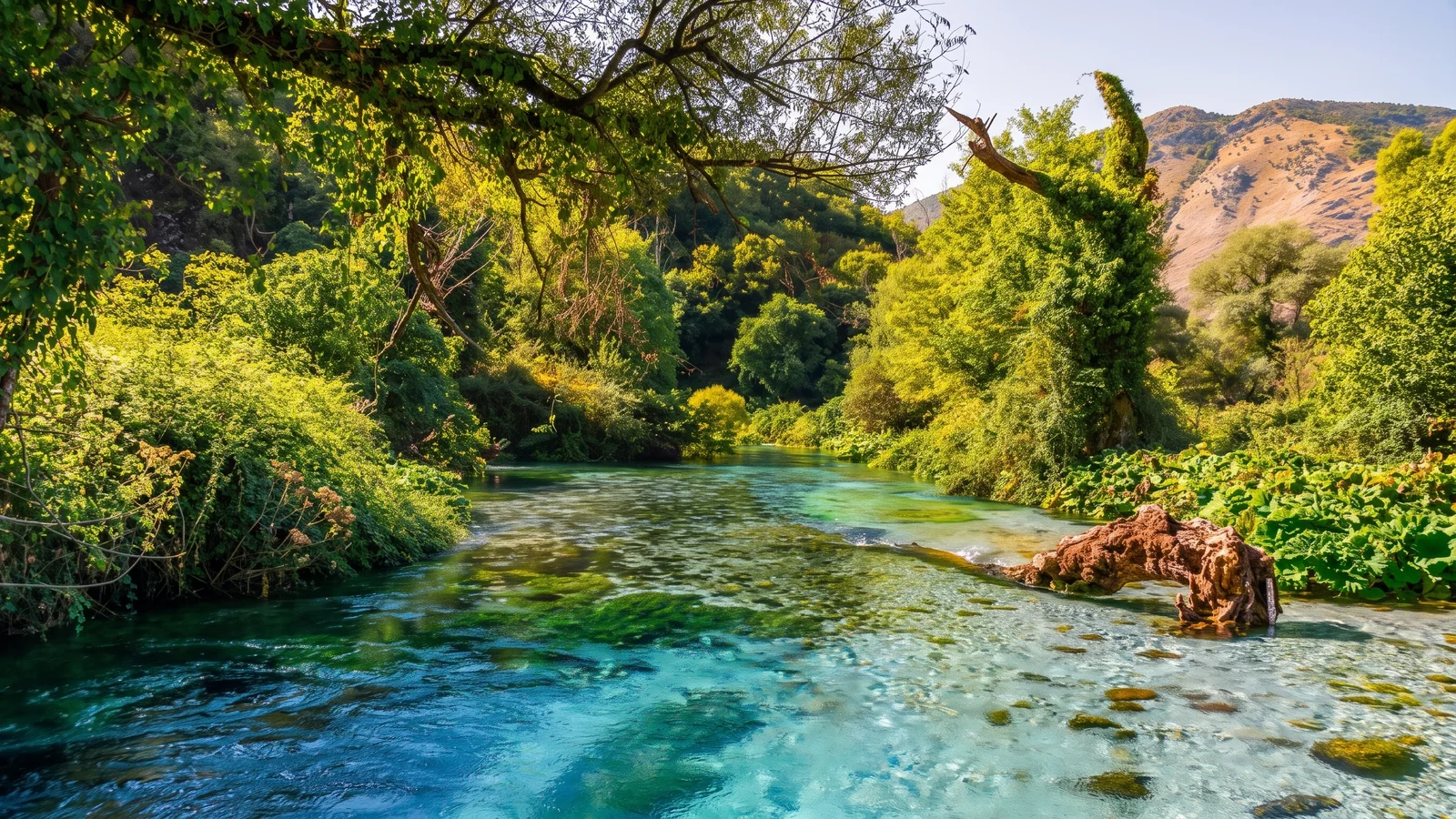
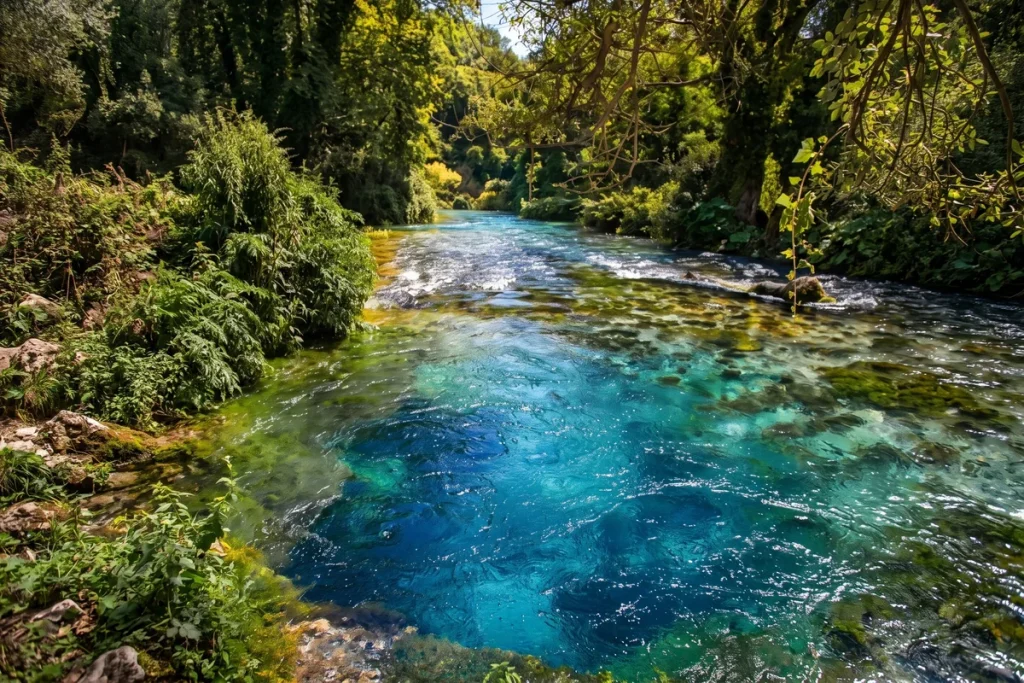
Blue Eye, also known as Syri i Kaltër, is a protected karst spring near Muzinë. Its exceptionally clear water shifts from deep blue at the centre to turquoise around the edges, creating a striking natural focal point within a wooded landscape.
It suits photographers, nature-focused travellers and anyone wanting a compact inland break between the southern coast and Gjirokastër. The reward is concentrated around one natural feature rather than a large park or a collection of separate attractions.
See Visit OptionsKnow before you go
Allow enough time for both the approach and the spring itself. Check current admission arrangements and operating hours locally before a late-day or off-season visit.
- Entry fee
- Check current feeA small cash charge is reported, but the current amount can change.
- Opening hours
- Check current hoursPublished hours conflict and may vary by season.
- Time needed
- About 1–2 hoursThis generally includes the approach and time at the spring.
- Walking
- 1.5–2.4 km each wayChoose the smoother road or the rougher forest option according to conditions.
- Crowds
- Summer weekends busiestEarly morning or later afternoon is generally calmer, subject to operating hours.
- Booking
- No confirmed requirementTours, taxis and transfers should be arranged separately when needed.
Getting to Blue Eye
Blue Eye lies near Muzinë between Sarandë and Gjirokastër. Most visitors reach the access area by road and then continue to the spring on foot or, when operating, by seasonal local transport.
The spring and its setting
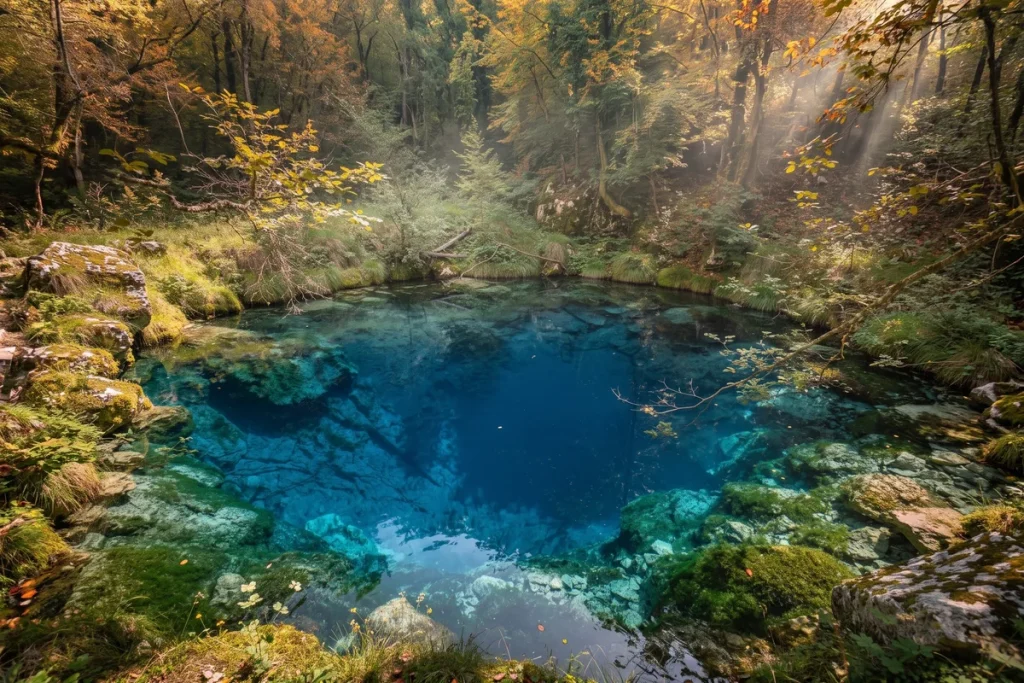
Follow the water from the eye-like spring basin into its wooded surroundings, using the viewpoints to appreciate how the colour changes with angle and light.
The spring basin is the unmistakable focus, but take time to observe the moving water and woodland around it rather than treating the site as a single photo point. The colour contrast is usually most apparent from above, while lower angles emphasize reflections and the flow away from the basin.
Plan your time on site
What to see
- The Blue Eye basinThe spring’s dark central opening and pale turquoise edges create the eye-like appearance behind the Albanian name Syri i Kaltër. Viewing areas provide the clearest perspectives over the basin.
- The spring outflowBeyond the central pool, clear water flows away through dense vegetation. This wider setting shows that Blue Eye is an active karst spring rather than an isolated blue pool.
- Woodland viewpointsRailings, platforms and nearby benches offer several angles on the water and surrounding greenery. Photographers can compare the deep central blue with the brighter shallows and reflections.
Plan ahead
- Blue Eye is built around a single natural phenomenon, so the viewing area can feel busy when several groups arrive together. The vivid water is the reward rather than a long list of activities, and commercial services may be reduced outside the main visitor season. It is most satisfying when approached as a focused nature visit with time to observe the spring and its outflow.
- Viewing areas Platforms and railings — These provide the main perspectives over the spring basin.
- Rest points Benches near the spring — Seating is available around the principal viewing area.
- Refreshments May be seasonal — A café or restaurant is reported, but availability should not be assumed year-round.
- Local transport Seasonal tourist train — Operation can vary, so visitors should be prepared to walk.
- Footwear Shoes with good grip — Particularly useful if choosing the rougher forest route.
- Water and sun cover Bring your own — Prepare for heat and exposed sections during the approach.
Is Blue Eye right for you?
Best suited to
- Nature photographers — The spring’s dark centre, turquoise margins, moving water and wooded surroundings provide several distinct compositions.
- Southern road trippers — Blue Eye fits naturally into a journey between the coast and Gjirokastër when enough time is reserved for the visit.
- Walkers seeking a short outing — Visitors comfortable with several kilometres on foot can choose between the smoother road approach and a rougher forest option.
May not suit
- Swimming seekers — Swimming in the protected spring is prohibited, so choose another destination if entering the water is essential.
- Limited-mobility visitors — The main approach is largely firm or paved, but steps and uneven ground in the final section can restrict access.
- Heat-averse travellers — The return distance and limited shade on parts of the approach can be demanding in hot weather.
- Rushed itineraries — The spring is compact, but reaching it means this cannot sensibly be treated as a roadside photo stop.
Families can enjoy the clear visual focus of the spring, but should judge suitability by the walking distance, uneven final section and summer heat.
Before you go
Practical details to check before visiting Blue Eye.
- Best time
- Shoulder seasonsVisit early in the day to reduce heat and crowd pressure.
- Swimming
- Prohibited in the springBlue Eye is a viewing and photography stop, not a swimming site.
- Payment
- Carry cashCash may be needed for entrance, parking or seasonal transport charges.
- Summer conditions
- Hot and busyParts of the approach have limited shade.
Blue Eye visitor questions
Practical answers to help you plan your visit.
Why is it called the Blue Eye?
Viewed from above, the dark blue centre resembles a pupil while the lighter turquoise water around it suggests an iris.
What kind of natural feature is Blue Eye?
It is a karst spring, where groundwater emerges through limestone. The clear water and depth around the outlet create its characteristic colour contrast.
Is this the same Blue Eye as the one near Theth?
No. This guide covers Syri i Kaltër near Muzinë in southern Albania, between Sarandë and Gjirokastër. The attraction commonly called the Blue Eye of Theth is a different site in northern Albania.
Is there more to see than the central pool?
The central basin is the main attraction, but the spring outflow, woodland setting and changing views from the platforms add context and photographic variety.
Does bad weather affect the visit?
Rain can make the rougher forest option slippery and reduce the appeal of the outdoor viewpoints. The smoother road approach is the more practical choice when conditions are uncertain.