
Berat Castle Travel Guide
Explore an inhabited hilltop fortress above Berat, where Byzantine churches, Ottoman remains and stone lanes open onto views across the historic city and Osumi River.
- Visit length
- Allow roughly 2–3 hours
- Setting
- Inhabited hilltop fortress
- Best for
- Heritage-focused travellers
Berat’s fortress neighbourhood
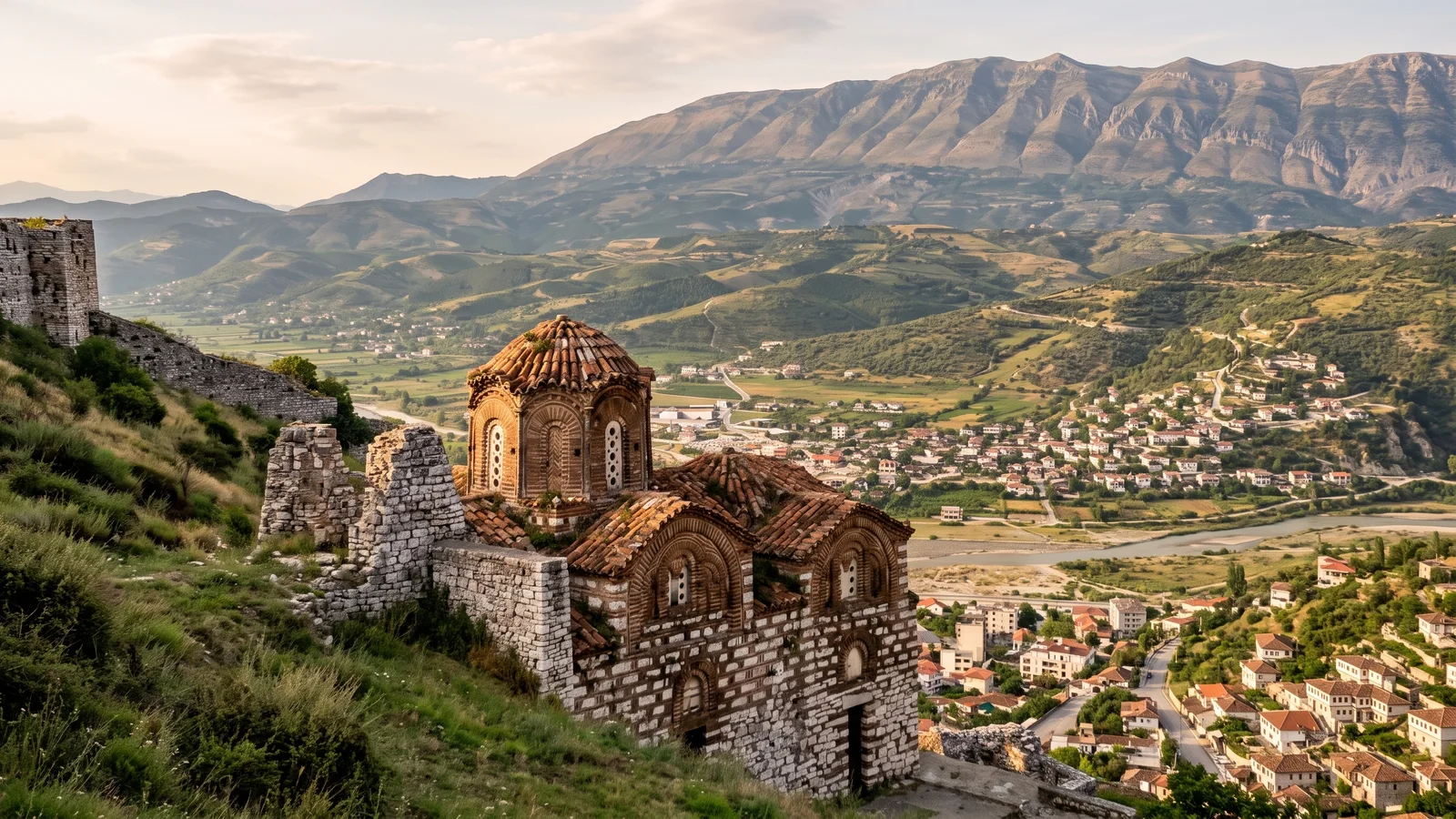
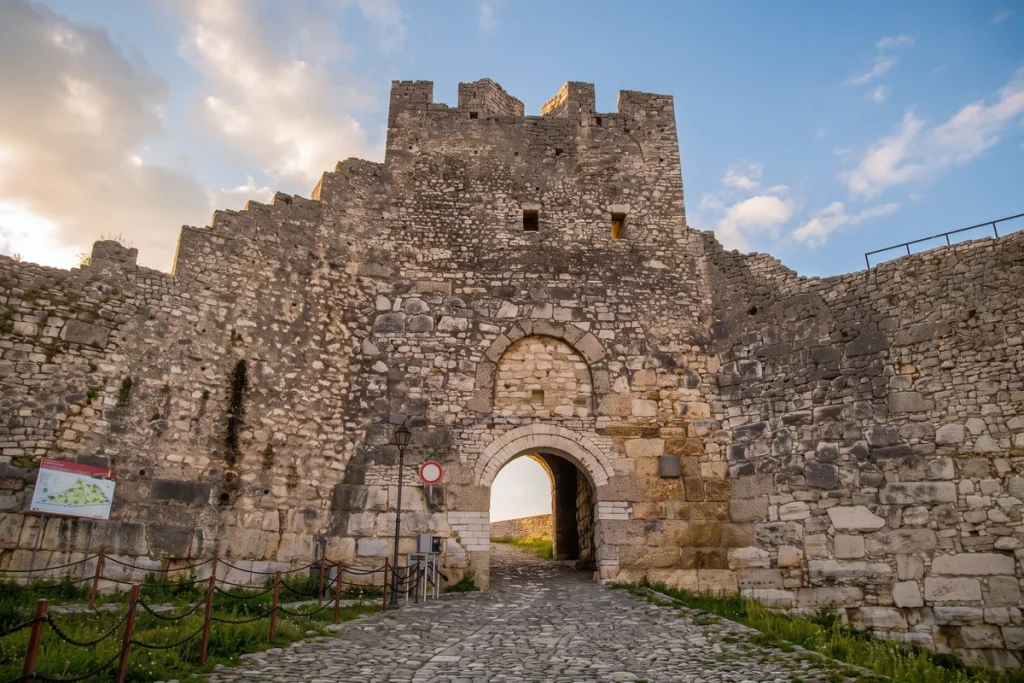
Berat Castle, also known as Kalaja, crowns the hill above the Osumi River and remains an inhabited historic district rather than a sealed monument. Churches, mosque remains, defensive walls and stone lanes reveal the religious and urban layers of Berat’s fortified past.
The castle is central to understanding Berat’s historic landscape. From its walls and viewpoints, the relationship between the fortress, the Mangalem and Gorica quarters, and the river below becomes especially clear.
See Visit OptionsKnow before you go
Treat the castle district and the Onufri Iconographic Museum as separate parts of the visit, and confirm current staffed access and admission arrangements locally.
- Time needed
- Roughly 2–3 hoursAllow additional time if you plan to enter the Onufri Iconographic Museum.
- Castle admission
- Check at the gatePublished prices and reports of staffed access are inconsistent.
- Opening hours
- Check current hoursDependable staffed visiting hours are not confirmed.
- Museum entry
- Separate arrangementsDo not assume admission to the Onufri Iconographic Museum is included.
- Terrain
- Cobbles, slopes and stepsThe taxi or driving options avoid the climb to the gate, not the uneven ground inside.
- Crowds
- Earlier is usually quieterMidday and summer afternoons are more likely to be busy.
Getting to Berat Castle
The castle can be reached on foot, by taxi or by private car; a car is not necessary for visitors staying in Berat.
What to see inside
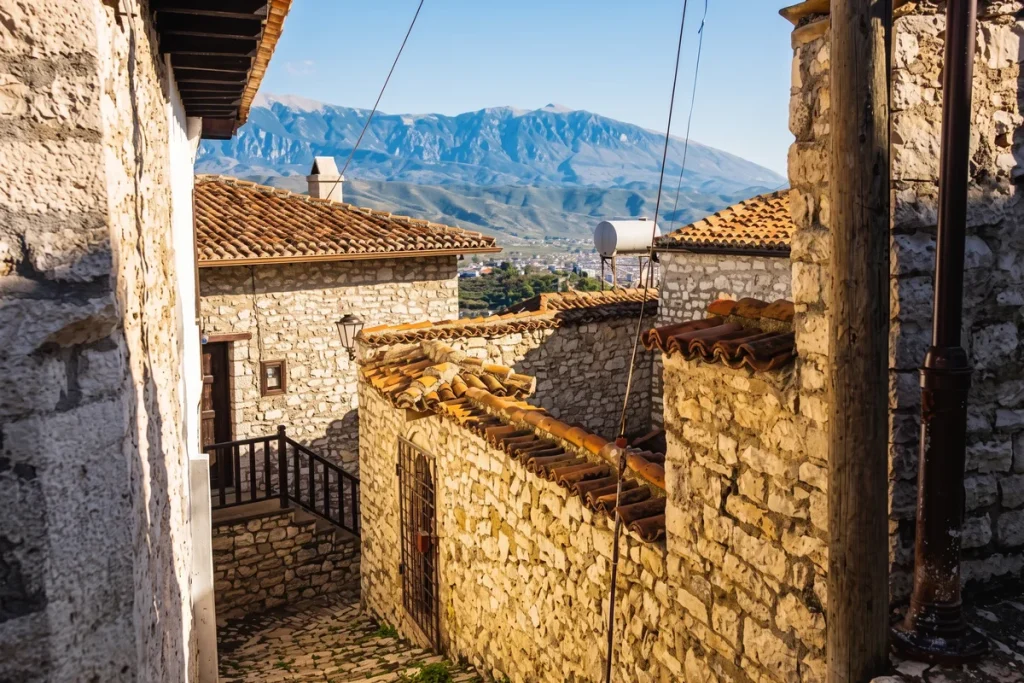
The experience unfolds through a lived-in fortress district, with religious monuments and ruined defensive structures set among houses and stone lanes.
Move slowly through the fortified lanes, looking for surviving walls, church façades and Ottoman remains between occupied homes. The appeal comes from seeing these layers together within a neighbourhood that is still inhabited, not from one intact palace or a prescribed route.
The Onufri Iconographic Museum provides the strongest focused introduction to Berat’s tradition of icon painting. The walls and viewpoints then place that religious and artistic history within the wider geography of the city.
Plan your time on site
What to see
- Holy Trinity ChurchThis medieval Byzantine church stands prominently within the upper fortress. Its compact cross-in-square form and hillside position make it one of the castle’s most recognisable surviving monuments.
- Onufri Iconographic MuseumHoused in the Cathedral of the Dormition of St Mary, the museum displays Albanian religious art associated with the 16th-century master Onufri and other icon painters.
- Church of St Mary of BlachernaeOne of the castle district’s historic Orthodox churches, it helps show how extensively Christian religious life endured within Berat’s fortified settlement.
- Red Mosque ruinsThe surviving minaret and foundations belong to one of the castle’s early Ottoman-era mosques. They provide a clear counterpoint to the district’s numerous churches.
- Castle walls and viewpointsSections of the fortifications frame wide views over Mangalem, Gorica, the Osumi River and surrounding hills, helping visitors understand why this elevated position was strategically important.
Plan ahead
- Berat Castle is not a single restored building with a short, level circuit. Some structures survive only in part, monuments are scattered among occupied homes, and interpretation is not continuous throughout the district. Its character comes from piecing together churches, mosque ruins, walls and everyday neighbourhood life rather than following a polished museum route.
- Footwear Wear shoes with good grip — Cobbles, slopes and steps continue throughout the district.
- Drinking water Carry enough for your visit — Exposed walking can be uncomfortable during hot summer weather.
- Sun protection Bring a hat and sunscreen — Shade is inconsistent along the lanes and viewpoints.
- Restrooms Availability is limited — Use available facilities when convenient rather than relying on one at every monument.
Is Berat Castle right for you?
Best suited to
- Heritage-focused travellers — The inhabited fortress combines churches, Ottoman remains, defensive structures and a historic neighbourhood in one substantial visit.
- Independent explorers — The castle rewards visitors comfortable following lanes and monuments without relying on a tightly prescribed circuit.
- Photographers — Historic stonework and elevated views over Berat provide varied architectural and landscape subjects.
- Unhurried visitors — Travellers prepared to pause at individual monuments will gain more from the dispersed district than those seeking one quick viewpoint.
May not suit
- Limited-mobility visitors — Cobblestones, slopes, steps and uneven ground make the site difficult to navigate.
- Families using strollers — The steep and irregular terrain makes stroller access impractical.
- Nervous hill-road drivers — The narrow, steep cobbled approach can be uncomfortable when vehicles need to pass.
- Quick-stop itineraries — The castle’s monuments are spread across a lived-in district and cannot be appreciated as a brief roadside stop.
Families can enjoy the castle, but adults should account for the steep, irregular ground when visiting with young children.
More places worth exploring
Explore related places around Berat Castle.
- AttractionOnufri Iconographic MuseumTicketed icon museum.
- AttractionMount TomorrFull-day mountain excursion.
Before you go
Practical details to check before visiting Berat Castle.
- Best time
- Morning or late afternoonThese periods generally bring gentler light and less summer heat.
- Best seasons
- Spring and autumnConditions are typically more comfortable than during hot summer afternoons.
- Facilities
- Limited visitor servicesCafés, shops and restrooms are reported within the inhabited district, but availability varies.
- Visit style
- Self-guided explorationThe monuments are dispersed among homes and stone lanes rather than arranged along one fixed circuit.
- Winter visits
- Check arrangements locallyThe district is visitable year-round, but staffed access and museum hours can vary.
Understanding Berat Castle
Practical answers to help you plan your visit.
Is Berat Castle also called Kalaja?
Yes. Kalaja is the Albanian word for castle and is commonly used for Berat’s fortified hilltop district.
Is the castle still inhabited?
Yes. Homes and small local businesses remain within the walls, so visitors should treat the lanes as a living neighbourhood as well as a heritage site.
Can Berat Castle fit into a cultural day?
Yes. It combines naturally with Mangalem, Gorica and the historic centre below, making it a strong anchor for a day focused on Berat’s architecture and religious heritage.
Is a guided visit necessary?
No. It works as a self-guided visit, though a guide can add context where ruins and partly preserved buildings are difficult to interpret on their own.
What is the main difference between the castle and the Onufri Museum?
The castle is the wider fortified district, while the Onufri Iconographic Museum is a dedicated collection inside the Cathedral of the Dormition of St Mary.