
Butrint Archaeological Park Travel Guide
Explore Greek, Roman, early Christian and Venetian remains amid woodland and wetlands on a peninsula near Albania’s southern coast.
- Best for
- Archaeology and history enthusiasts
- Historic range
- Ancient city to Venetian fort
- Landscape
- Woodland, lagoon and ruins
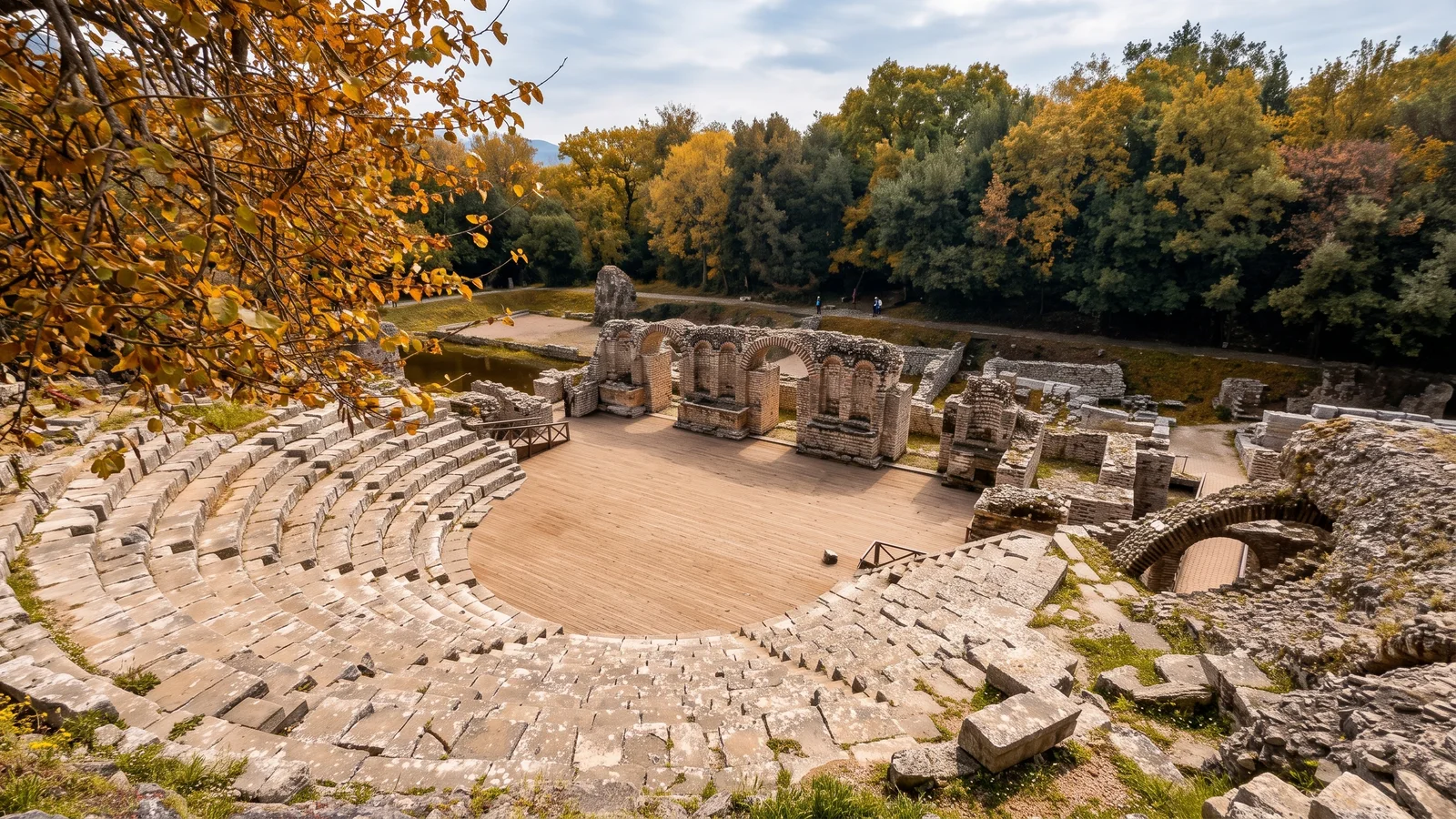
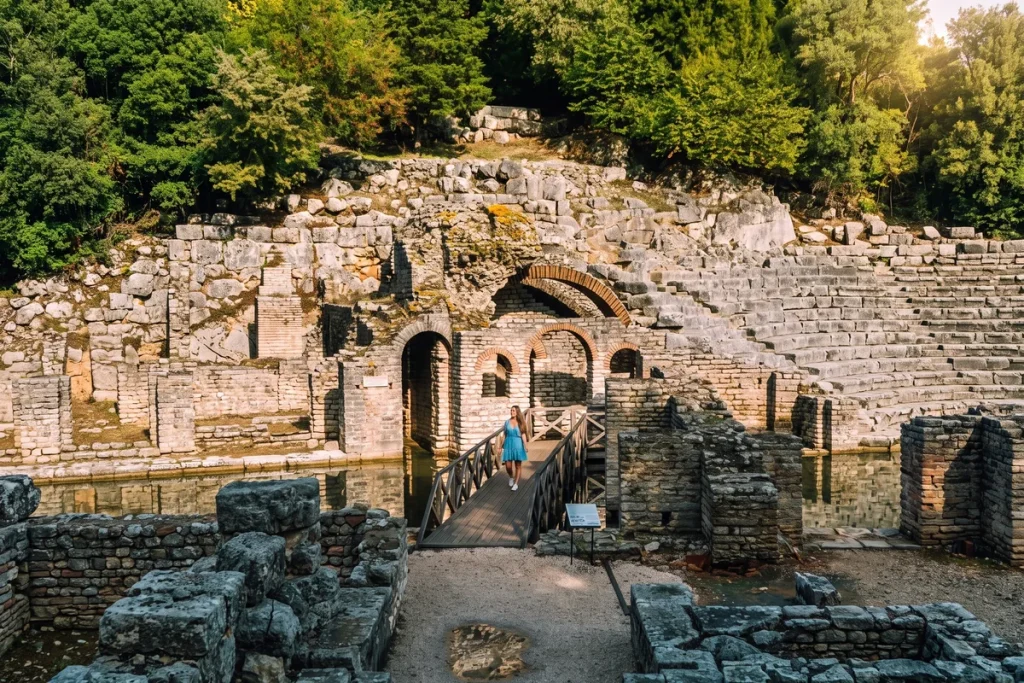
A layered archaeological landscape
Butrint is an archaeological park and UNESCO World Heritage site where Greek, Roman, early Christian and later medieval remains occupy the same peninsula.
Its theatre, forum, baptistery, basilica, gates and fortifications reveal how the settlement changed as political power and religious life shifted around the Mediterranean.
Read the full overview
The surrounding landscape is integral to the experience. Woodland encloses much of the circuit, while the Vivari Channel, Lake Butrint and nearby wetlands explain the city’s strategic position.
The site is most rewarding for travellers who enjoy archaeology, cultural history and interpreting buildings within their wider setting.
Know before you go
Check current admission procedures and opening hours before travelling, particularly outside the main season. Published operational details do not always agree.
- Tickets
- Check current priceTicket prices and categories can change; gate sales are reported.
- Opening hours
- Check before travelPublished seasonal schedules and last-entry times differ.
- Time needed
- About 2–3 hoursAllow longer for the museum, detailed interpretation or a slower pace.
- Terrain
- Uneven with climbsExpect stone, gravel, roots, steps and irregular paving.
- Crowds
- Summer can be busyMidday and weekends may bring the greatest visitor pressure.
- Advance booking
- Check current procedureTickets are reported at the gate, but entrance arrangements can change.
Getting to Butrint Archaeological Park
Butrint is reached from Sarandë through Ksamil along SH81. A car offers flexibility, but public transport, taxis and organised excursions make the park feasible without one.
What to see at Butrint
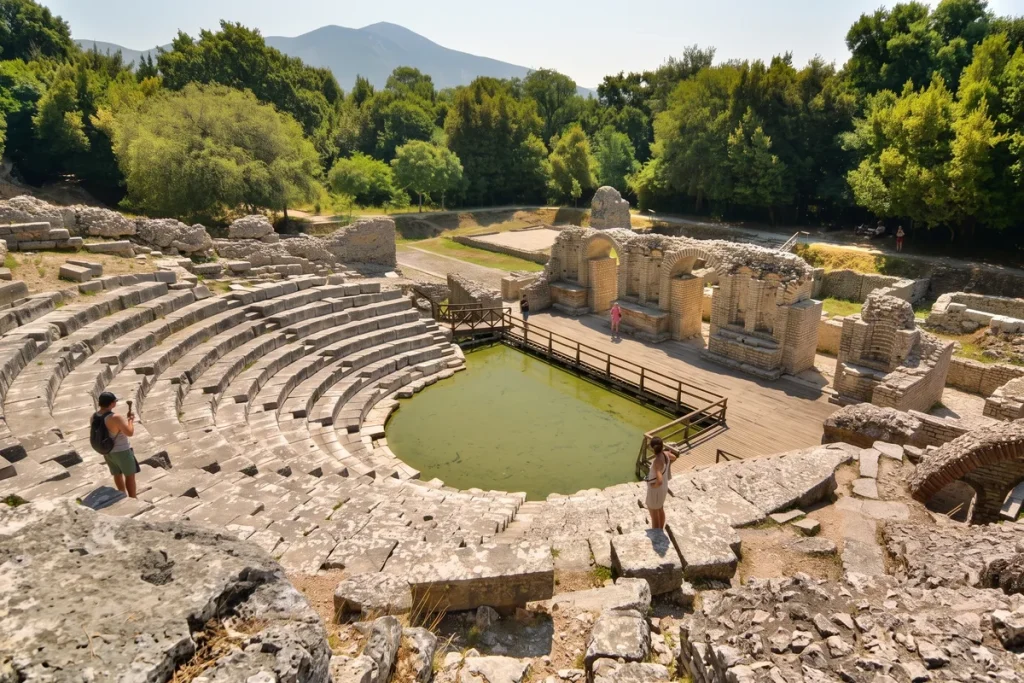
The main circuit passes through the lower ancient city before climbing to the fortified acropolis. Following that progression makes the site’s changing periods easier to understand.
Look beyond the individual monuments to the city’s relationship with water and defence. Walls follow the peninsula’s contours, gateways control movement through them, and the elevated acropolis overlooks the surrounding channel and wetlands.
The museum works best near the end of the circuit, after the buildings and changes in ground level have established their context. Visitors who study the architecture and interpretation closely will need more time than those simply following the main path.
Plan your time on site
What to see
- Ancient TheatreThe theatre began in the Greek period and was later enlarged and adapted under Roman rule. Its surviving seating, orchestra and stage area make it one of the clearest places to picture public life in the ancient city.
- Roman ForumThe forum and surrounding public buildings marked the centre of Roman civic life. Though many remains are low, this area shows how Butrint expanded beyond its earlier Greek core.
- BaptisteryThe large late-antique baptistery reflects Butrint’s importance as an early Christian centre. It is celebrated for its mosaic pavement, which may be covered to protect it.
- Great BasilicaThe basilica preserves substantial walls, rows of arches and a recognisable church plan. It is one of the park’s strongest surviving expressions of Byzantine Butrint.
- Lion GateThis narrow opening in the city wall takes its name from the carved relief above it. The gate’s reused masonry shows how Butrint’s fortifications were altered over time.
- Acropolis Castle and MuseumThe reconstructed Venetian castle crowns the upper area and contains the archaeological museum. Displays of objects from the site help connect the structures on the circuit with Butrint’s wider history.
Plan ahead
- Many structures survive as foundations, partial walls or fragments whose significance becomes clearer through signs and museum displays. The strongest experience comes from connecting these remains across the wooded peninsula rather than expecting every stop to be visually monumental. Protective measures may also conceal vulnerable features, including the baptistery mosaic.
- Footwear Grippy walking shoes — Stone, gravel, roots and uneven paving occur around the circuit.
- Water Bring your own — Food and drink provision within the park is limited or inconsistently described.
- Sun protection Important in summer — Woodland shades parts of the route, but other sections remain exposed.
- Toilets Available on site — Facilities are limited within the wider archaeological circuit.
- Information Signs around the route — On-site interpretation helps identify the principal monuments.
- Museum and shop At the upper site — The castle museum provides historical context, and a souvenir shop is reported.
Is Butrint Archaeological Park right for you?
Best suited to
- Archaeology enthusiasts — Greek, Roman, early Christian and Venetian remains can be read together within one archaeological landscape.
- Cultural travellers — Butrint is the principal heritage excursion from Sarandë and Ksamil and adds historical depth to a southern-coast itinerary.
- Photographers — Ruins framed by woodland, fortified gateways and views over the surrounding water create varied subjects beyond conventional monument photography.
- Families with older children — The theatre, Lion Gate and hilltop castle provide recognisable focal points for children comfortable with a sustained outdoor walk.
May not suit
- Visitors needing step-free access — Some entrance areas may be manageable, but steps, roots, climbs and irregular surfaces make a complete circuit difficult.
- Heat-averse travellers — Summer conditions can make the exposed and uphill sections disproportionately tiring.
- Visitors seeking intact buildings — Butrint is an archaeological landscape of foundations, partial walls and reconstructed context rather than a preserved ancient town.
For families with younger children, the main considerations are uneven ground, climbing and the limited services once inside the circuit.
More places worth exploring
Explore related places around Butrint Archaeological Park.
- BeachPulëbardha BeachSmall seasonal cove between Sarandë and Ksamil.
Before you go
Practical details to check before visiting Butrint Archaeological Park.
- Best season
- Spring or autumnMilder conditions make the outdoor circuit more comfortable.
- Summer visits
- Choose cooler hoursExposed sections can become tiring around midday.
- Winter visits
- Check operationsThe park is generally visitable year-round, but seasonal hours may change.
- Visit style
- Outdoor heritage walkButrint combines dispersed ruins, woodland paths and an uphill museum visit.
Planning your Butrint visit
Practical answers to help you plan your visit.
Does the baptistery mosaic stay visible year-round?
Not necessarily. The pavement may be covered for conservation, so plan to appreciate the baptistery’s architecture even if the mosaic is not exposed.
Can Butrint fit with a beach day?
Yes, especially from Ksamil, but avoid packing several additional stops around it. The archaeological circuit deserves a substantial part of the day rather than a rushed detour.
Is a guide necessary at Butrint?
No. Signs and the museum support an independent visit. A guide is most useful for travellers who want help interpreting the lower foundations, construction phases and links between historical periods.
Is the castle above the site original?
The acropolis museum occupies a reconstructed Venetian castle. Its position and displays are historically useful, but visitors should distinguish the reconstructed structure from the ancient remains below.
Is Butrint the same as Ali Pasha’s Castle?
No. Ali Pasha’s Castle is a separate fortified landmark near the Vivari Channel and should not be confused with the acropolis castle and museum inside the archaeological park.