
Gjirokastër Travel Guide
Stone roofs, Ottoman tower houses and a commanding fortress define this UNESCO-listed city above the Drino Valley.
- Ideal stay
- 2–3 nights
- Car
- Useful, not essential
- Best for
- UNESCO and Ottoman heritage
A city built in stone
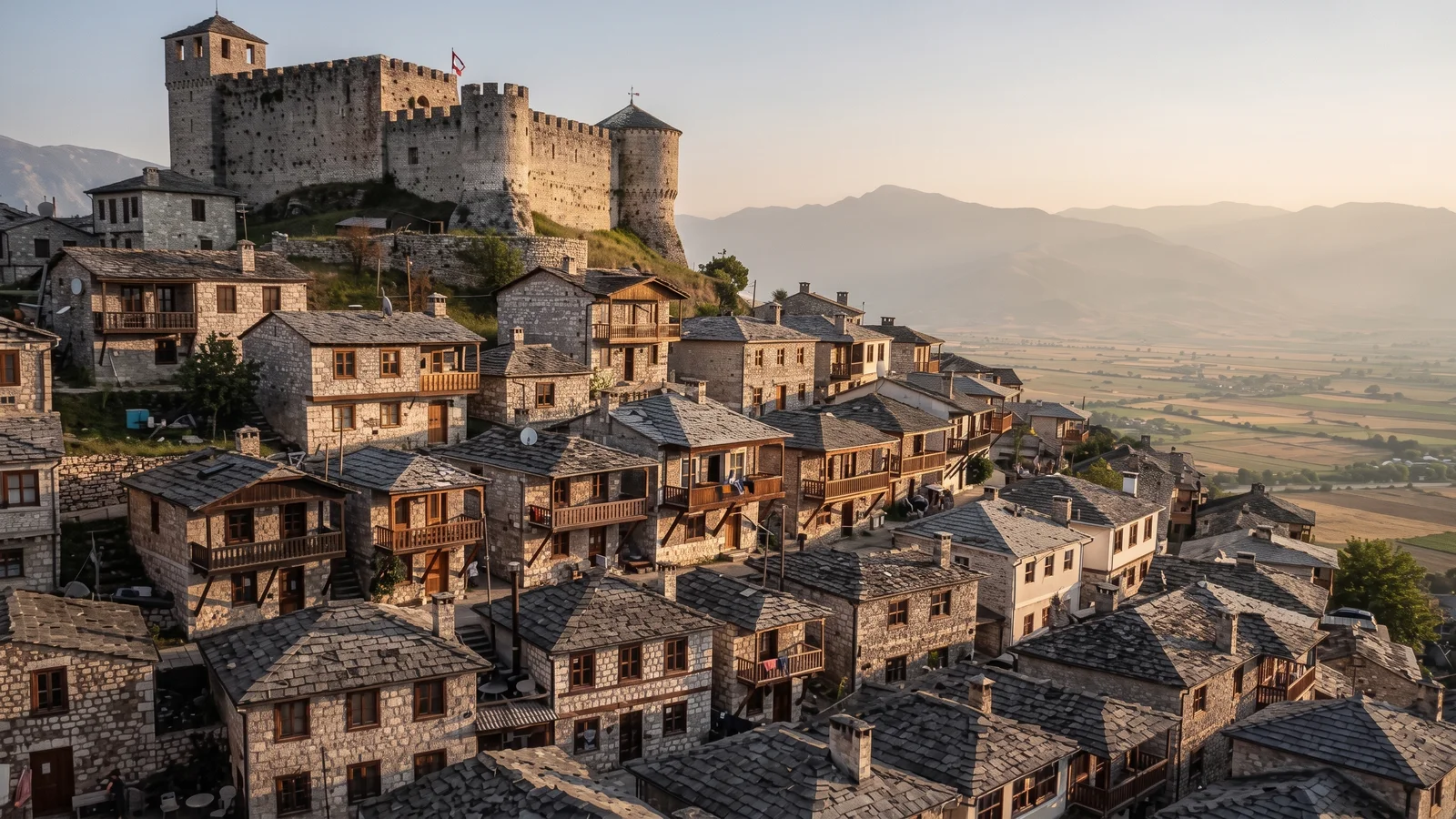
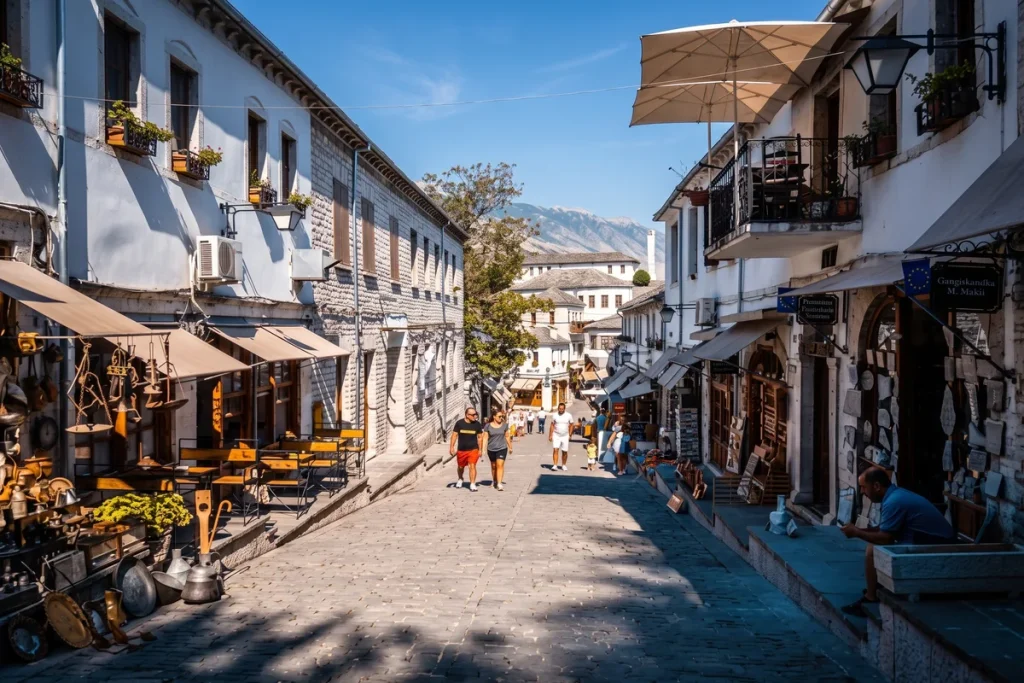
Gjirokastër’s defining sight is its layered historic landscape: a castle above stone-roofed Ottoman tower houses, museum-houses and the Old Bazaar, all overlooking the Drino Valley.
Its architecture makes the city more rewarding as a coherent place than as a collection of isolated monuments.
Read the full overview
The UNESCO-listed historic centre preserves an unusual concentration of fortified houses built into a steep hillside. Moving between the bazaar, residential quarters and castle reveals how domestic architecture, commerce and defence shaped the city across different periods.
Getting to Gjirokastër
Gjirokastër is reached by road; the final transfer depends on whether you stay in the lower town or the historic centre.
Before you travelTravel realities and local limitations1 note
The old city’s beauty comes with sustained physical effort: many worthwhile streets are narrow, uneven and sloping. Summer heat makes exposed sightseeing harder, while rain can reduce grip on the cobbles. A taxi can shorten the transfer from the lower town and reduce some climbs, but it cannot remove the need to walk within the historic core. Build pauses into the day rather than arranging the castle, museum-houses and outer sights as a continuous circuit.
Heritage worth slowing down for
Prioritise the castle, historic streets and a museum-house, then add Gjirokastër’s twentieth-century history and local food if time allows.
- 01
Explore Gjirokastër Castle
Walk through the fortress complex and seek out its historical displays and broad views. Its elevated position makes the relationship between the old quarters, newer lower town and Drino Valley especially clear.
- 02
Walk the Old Bazaar
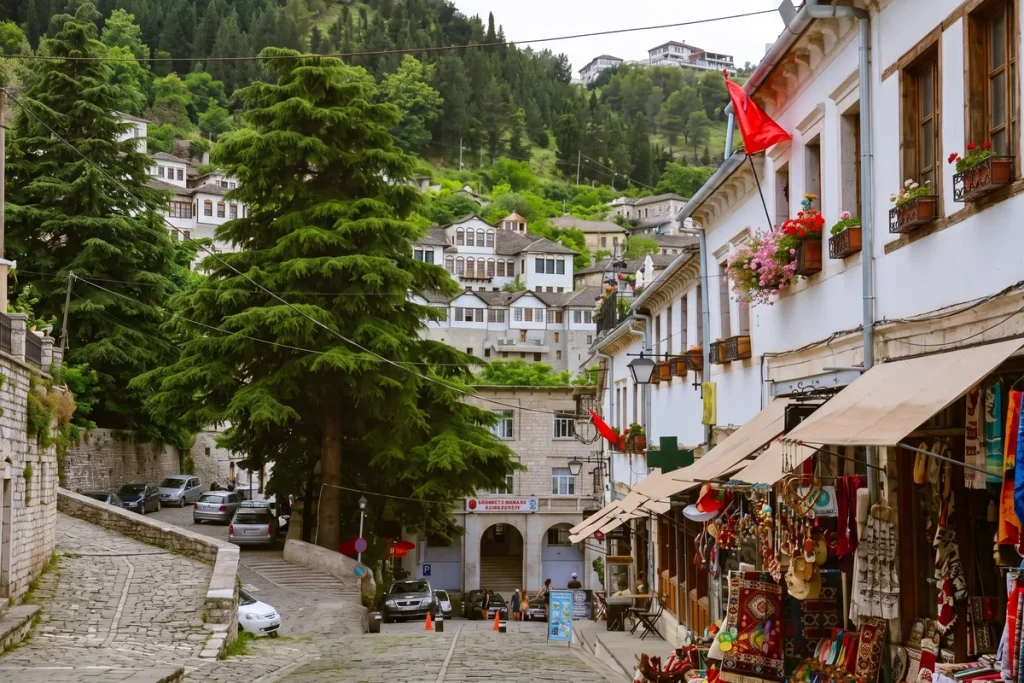
The bazaar anchors the historic core around its distinctive branching streets. Continue beyond the shopfronts into the surrounding lanes to appreciate the stone roofs and hillside pattern of the old city.
- 03
Enter an Ottoman museum-house
Visit a preserved tower house such as Skenduli House or the Zekate House. Their reception rooms, service spaces, defensive features and carved interiors explain how prominent Gjirokastër families lived far better than the façades alone.
- 04
Discover the Cold War Tunnel
The underground complex adds a stark twentieth-century layer to a city better known for Ottoman architecture. It helps place Gjirokastër within the isolation and civil-defence policies of communist Albania.
- 05
See the Ali Pasha Bridge
This surviving aqueduct section stands outside the central cluster of sights and offers a different perspective on the city’s historic water infrastructure and surrounding landscape. Treat it as an additional outing rather than a substitute for the castle and old quarters.
- 06
Try Gjirokastër cooking
Look for qifqi, the city’s characteristic rice balls seasoned with herbs, alongside dishes shaped by southern Albanian cooking. A meal around the bazaar provides a useful pause between the steep sightseeing sections.
Is Gjirokastër your kind of base?
Best suited to
- Cultural travellers — The castle, Ottoman tower houses and museum-houses reward visitors interested in architecture and layered history.
- Couples — Traditional guesthouses, valley views and the compact historic core suit an unhurried cultural break.
- Solo travellers — The principal heritage sights can be explored independently, while taxis help with transfers between the lower and upper city.
- Southern road trippers — Gjirokastër works well as an inland heritage stop between the Albanian coast, Përmet and routes towards Greece.
- Slow-paced visitors — Two full days leave room to compare museum-houses, explore residential lanes and spend time in the castle without reducing the city to a checklist.
May not suit
- Mobility-limited visitors — The steep, narrow cobbled streets and climb toward the castle can make access to principal sights difficult.
- Nightlife seekers — Gjirokastër is oriented toward heritage sightseeing, restaurants and quiet evenings rather than a substantial nightlife scene.
- Flat-city explorers — The historic core cannot provide the level, car-accessible sightseeing experience some travellers may need.
Families interested in history may enjoy the castle and traditional houses, but pushchairs and long sightseeing days can be difficult on the old streets.
Choose your base before your hotel
Choose your base according to the trade-off between historic atmosphere and easy vehicle access. Staying higher places the old city close by, while the lower town simplifies arrival but adds an uphill transfer for sightseeing.
Old Bazaar
This is the most convenient base for central sightseeing, restaurants and evening atmosphere. It suits travellers who want to walk from their accommodation, but steep lanes and restricted vehicle access can complicate luggage handling.
Palorto and Castle Slopes
This elevated area offers traditional houses, quieter surroundings and views across the old city. It suits atmosphere-focused stays and places the castle nearby, though returning from lower areas involves more climbing.
Lower Town
The lower town offers flatter access, modern facilities and simpler road arrival. It is practical for drivers and travellers managing luggage, but reaching the Old Bazaar and castle requires an uphill journey.
Before you go
The essentials for planning a stay in Gjirokastër.
- Best months
- April–June, September–OctoberThese months are generally more comfortable for walking-focused sightseeing.
- Currency
- Albanian lek (ALL)Keep some lek available for smaller purchases.
- Visit length
- One to two full daysUse additional time for a slower pace or a regional excursion.
- Day trip
- PossibleAn overnight stay leaves more time for museum-houses and the historic streets.
- Regional outings
- Car, taxi or tour usefulScattered rural sites are less flexible to reach by corridor bus.
Practical Gjirokastër questions
Practical answers to help you plan your visit.
Why is Gjirokastër called the Stone City?
The name reflects the old city’s extensive use of local stone, particularly its characteristic roofs, walls, lanes and fortified tower houses.
Which traditional house should I visit?
Skenduli House and Zekate House are prominent examples, but the best choice depends on which interiors are available during your visit. Seeing one house in depth is more informative than viewing several only from outside.
Is the Old Bazaar the whole historic centre?
No. The bazaar is its commercial heart, but the UNESCO-listed urban landscape extends into residential hillside quarters where many of the characteristic tower houses stand.
What local food is associated with Gjirokastër?
Qifqi—small rice balls seasoned with herbs—is the city’s best-known speciality. Menus also draw on the meat, dairy, vegetable and pastry traditions of southern Albania.
Which excursions pair well with Gjirokastër?
Antigonea Archaeological Park offers an ancient-site contrast, while Përmet and the Vjosa area suit a broader inland itinerary. The Blue Eye can be combined with travel toward Sarandë, but scattered stops are simplest with a car, taxi or organised excursion.